 Image 1 of 2
 Image 2 of 2
Companion Plants
Highlight the brilliant blue globe thistle with complementary warm tones:

Perennial. Low maintenance and long-blooming, this uncommon perennial is an ideal choice for poor, dry soils. A profusion of 1” magenta flowers float above fuzzy, silver-gray foliage, attracting bees, butterflies, and curious onlookers. In the garden, combine with annuals and perennials in pink, purple or blue shades, or contrast with bright yellow flowers. The best effect is seen when grouped in a mass planting. A border or landscape will naturally fill in when plants are allowed to self-seed; Don’t mulch around the base and leave the ground undisturbed in fall to see volunteers pop up in the spring. As a perennial, expect sparse first year blooms, and an explosion of colour in the second. Plants are drought tolerant, and prefer fairly dry, well-draining soil. However, they will also tolerate clay soil, alkalinity, and moist conditions.
Location: Sunny border, Landscape planting, Rock garden, Cottage garden
Bloom Period: June to July
Height: 2.5’
Plant Spacing: 12-15'“

Perennial. Magnificent flower heads in lively shades of red, rose, or lavender. Yarrow grows tall and wide, with fine, feathery foliage and long stems that are excellent for cutting. They are a good choice near the vegetable garden, as they attract beneficial insects, pollinators and butterflies, and repel harmful pests. As an added bonus, they are one of the best companions for roses, serving similar pest control duties, without drawing undue resources from the soil. Plants are very easy to grow, tolerating heat, drought, salt and poor soil conditions. They will easily naturalize into the garden, provided soil is well-draining and they receive adequate light.
Location: Sunny border, Wildflower meadow, Coastal garden, Rose garden
Bloom Period: June to September
Height: 24”
Plant Spacing: 12-24”
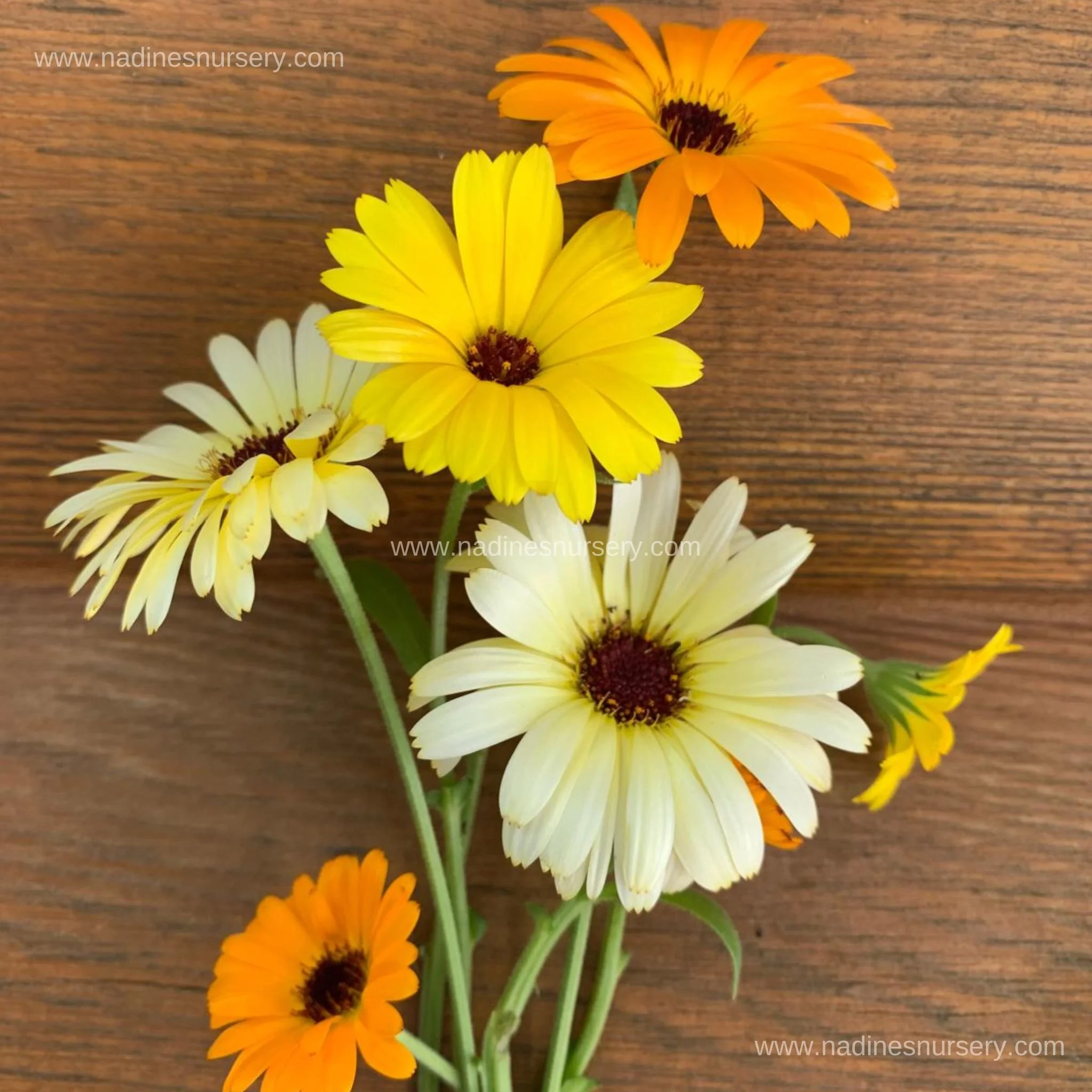
Annual. The quintessential calendula. Blooming in shades of yellow, orange and gold, their double flowers are long-lasting, heat tolerant and can thrive in poor soils. They make a great cut flower and a lovely background for fall mums.
Calendula are a terrific vegetable companion, as they attract pollinators and repel harmful nematodes in the soil. Their flowers are edible and dried petals can be used in place of saffron, as a garnish, or to make a delightful tea. They are very easy to grow, requiring minimal watering and feeding. Plant in poor to average, well-draining soil and deadhead occasionally for increased blooms.
Location: Mid-border, Vegetable garden
Bloom Period: June to September
Height: 18-24”
Plant Spacing: 12-16”

Annual. Bushy plants are smothered in large, double white blooms. ‘Zahara’ are continuously covered in vibrant, 2.5” blooms. They are tough plants, with high disease resistance and a “Flameproof” distinction that makes them ideal for hot, sunny dry areas in which other plants have failed.
Zinnias will attract an abundance of butterflies and hummingbirds to the garden! Dwarf varieties are beautiful in the landscape or mixed containers, providing a flush of cheerful colour all season. Intermediate and tall varieties are outstanding cut flowers. Give the vegetable garden a boost by planting zinnias near tomatoes, potatoes and beans. Plants are very easy to grow, tolerating both heat and drought once established. For best performance, plant in rich, well-draining soil and water regularly.
Location: Mid-border, Mixed container, Landscape planting
Bloom Period: June to September
Height: 16-20”
Plant Spacing: 12”