For the Bees
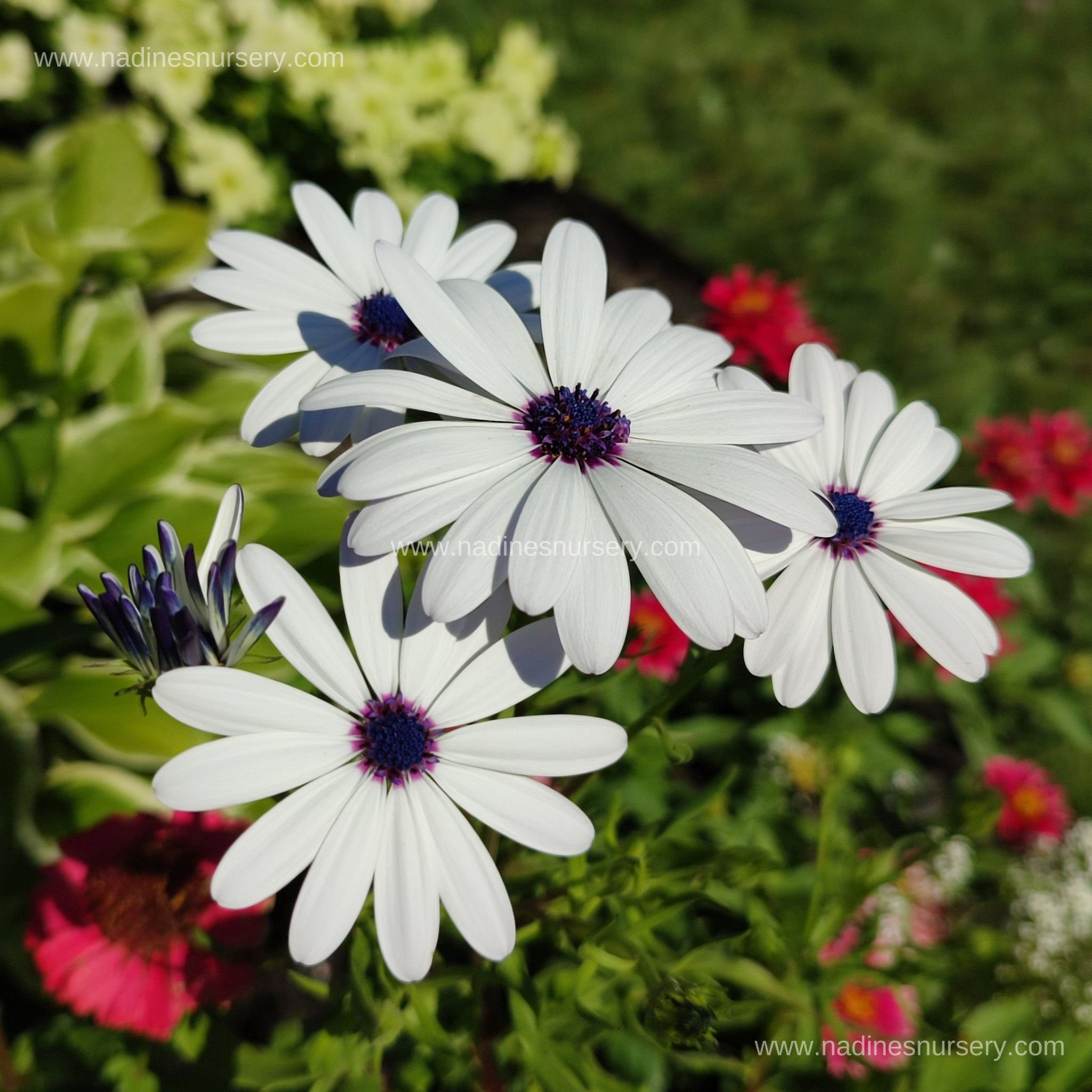
Annual. Looking for a unique flower that loves the dry heat and thrives on neglect? These blue-eyed beauties are your answer. Extremely easy to grow, they thrive in poor soil that is well-draining. Once established, they are exceptionally heat and drought tolerant, being native to the windy coastline of South Africa. For our North American gardens, they are very attractive in mass plantings and perform well in containers. They require minimal care, but deadheading will encourage continuous blooms, and fortunately, they make beautiful cut flowers. Use them to fill a hot, dry, sandy space in the garden, and wait to be dazzled by their glorious blooms.
Location: Sunny border, Rock garden, Cottage garden
Bloom Period: July to October
Plant height: 18-24”
Plant spacing: 12-18”
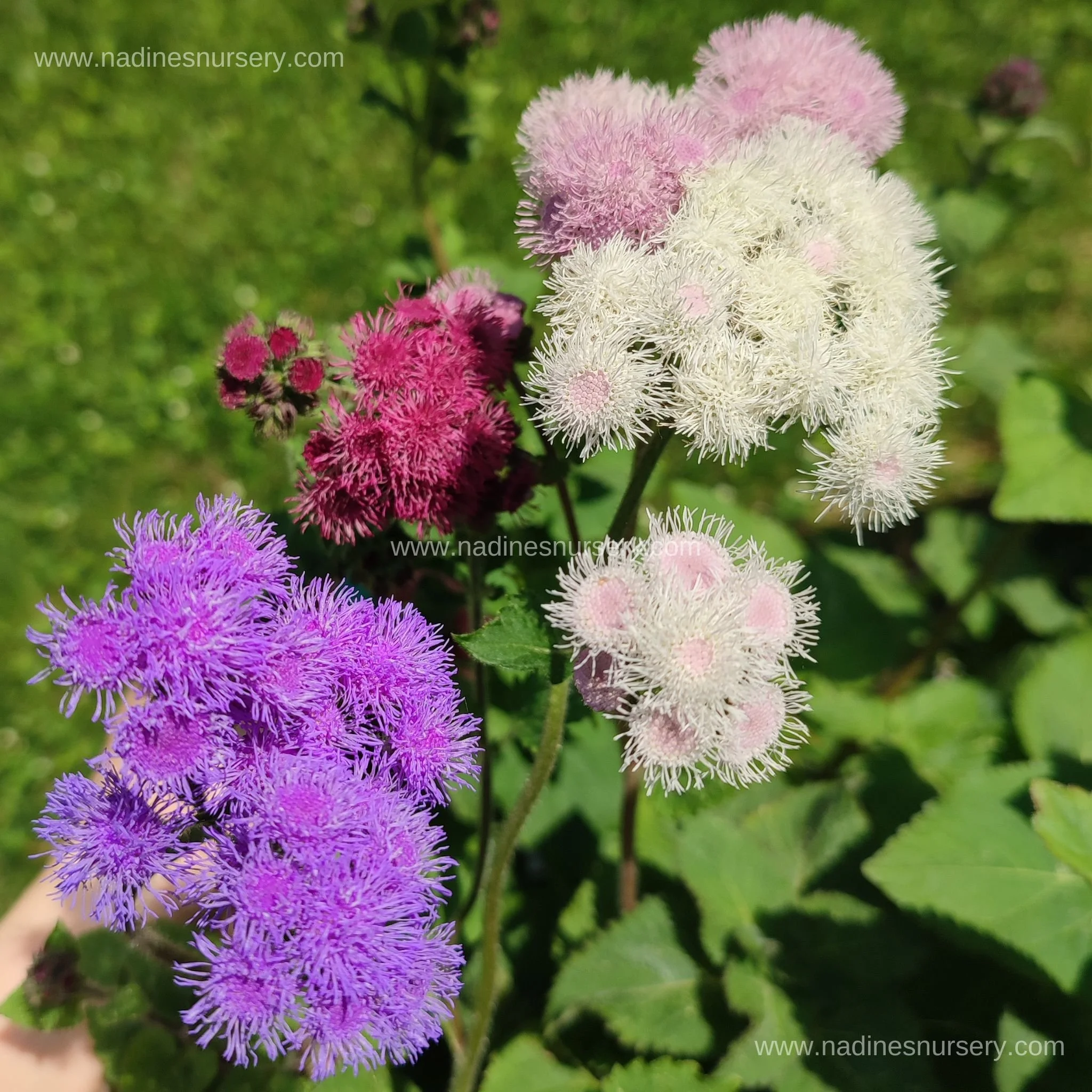
Annual. These precious flowers are an old-fashioned favourite. Beloved by pollinators and gardeners alike, they begin blooming in spring and don’t slow down until frost. Their flowers are loaded with nectar and support beneficial insect populations in the garden. The plants are hardy, very easy to grow and require little maintenance throughout the season. For those who adore cut flower arrangements, these beauties will be the last flower to wilt in the vase. This variety is a mix of red, pink, blue and white shades. Plant in moist, well-draining soil.
Location: Mid-border, Landscape planting, Mixed container, Rock garden
Bloom Period: June to September
Height: 24”
Plant Spacing: 9-12”

Annual. This variety comes in a cheerful combination of pastel shades from lavender and pink to white. The plants stay tidy longer than other varieties, making them excellent for borders, and suitable for even small pots or hanging baskets. Their honey-sweet fragrance is a delight in the garden, and their small, clustered flowers are extremely attractive to pollinators. Plant in bunches to brighten up a bare patch, or tuck into the vegetable garden to add colour and draw the bees en masse. Plant in moist, well-draining soil and fertilize monthly.
Location: Front of border, Mixed container, Landscape planting
Bloom Period: June to October
Height: 4”, spreading to 12”
Plant Spacing: 10”
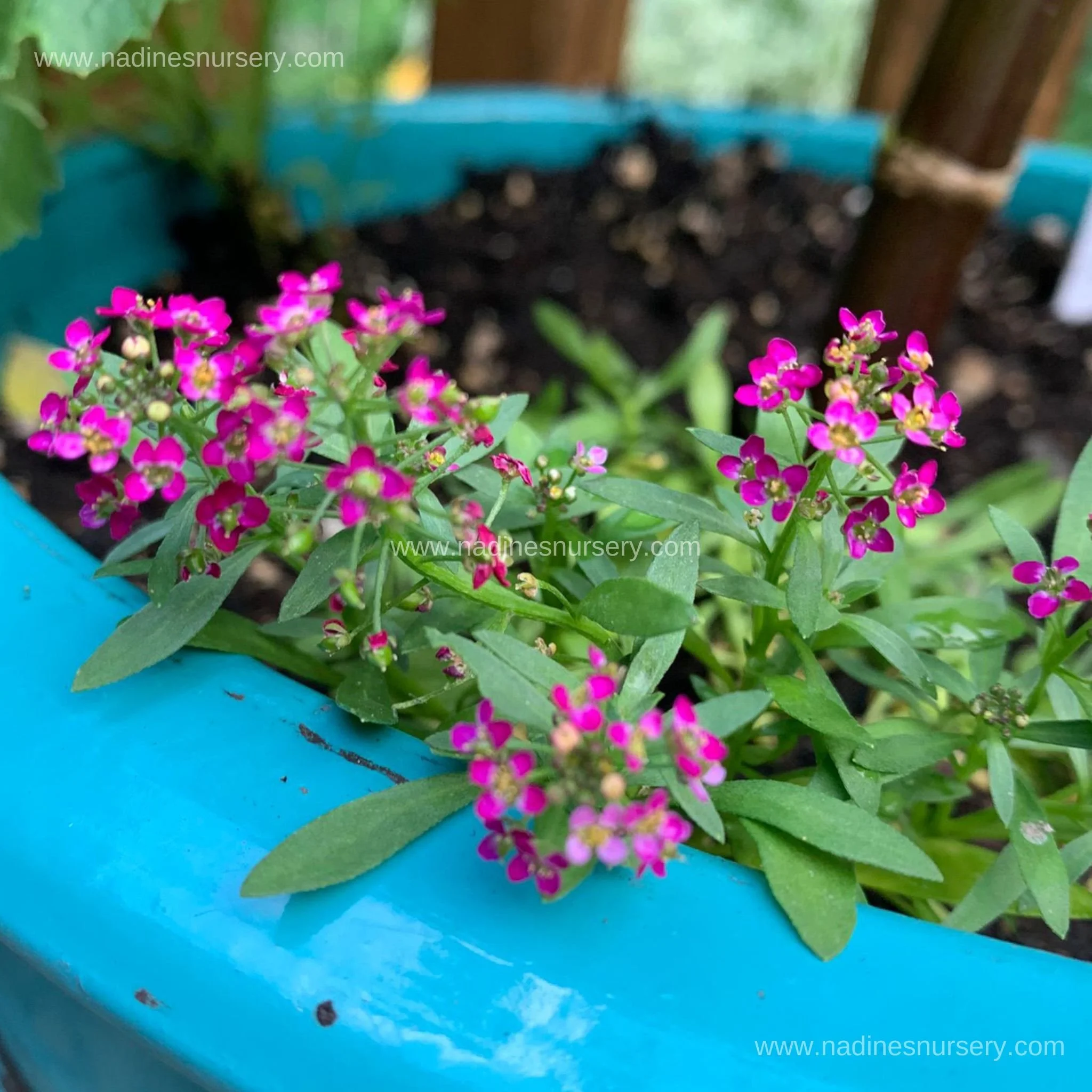
Annual. This delightful variety has mastered the art of balancing bold colour with delicate texture. ‘Wonderland’ alyssum are a compact variety that are easily tucked into a corner yearning for a burst of colour. As a hardy annual, they will often reseed themselves, without becoming invasive. They are perfect for a pollinator garden, easily attracting butterflies and bees with their fragrant, pink blooms. Plant in moist, well-draining soil and fertilize monthly.
Location: Mixed container, Butterfly garden, Vegetable garden
Bloom Period: June to October
Height: 4”, spreading to 10”
Plant Spacing: 6”

Annual. A waterfall of cascading, coral pink tassel flowers that will draw delighted whispers throughout summer and fall. The plants are heat tolerant, huge, and require little maintenance. Bright green leaves are also edible. Plant in tall pots so the long tassels can spill over the sides. Arching branches can also be used for cut flower arrangements. Although drought tolerant once established, regular watering will produce more flowers and induce faster growth. Plants will tolerate any soil type, provided there is good drainage.
Location: Rear border, Container, Cottage garden
Bloom Period: July to October
Height: 3-5’
Plant Spacing: 18-24”
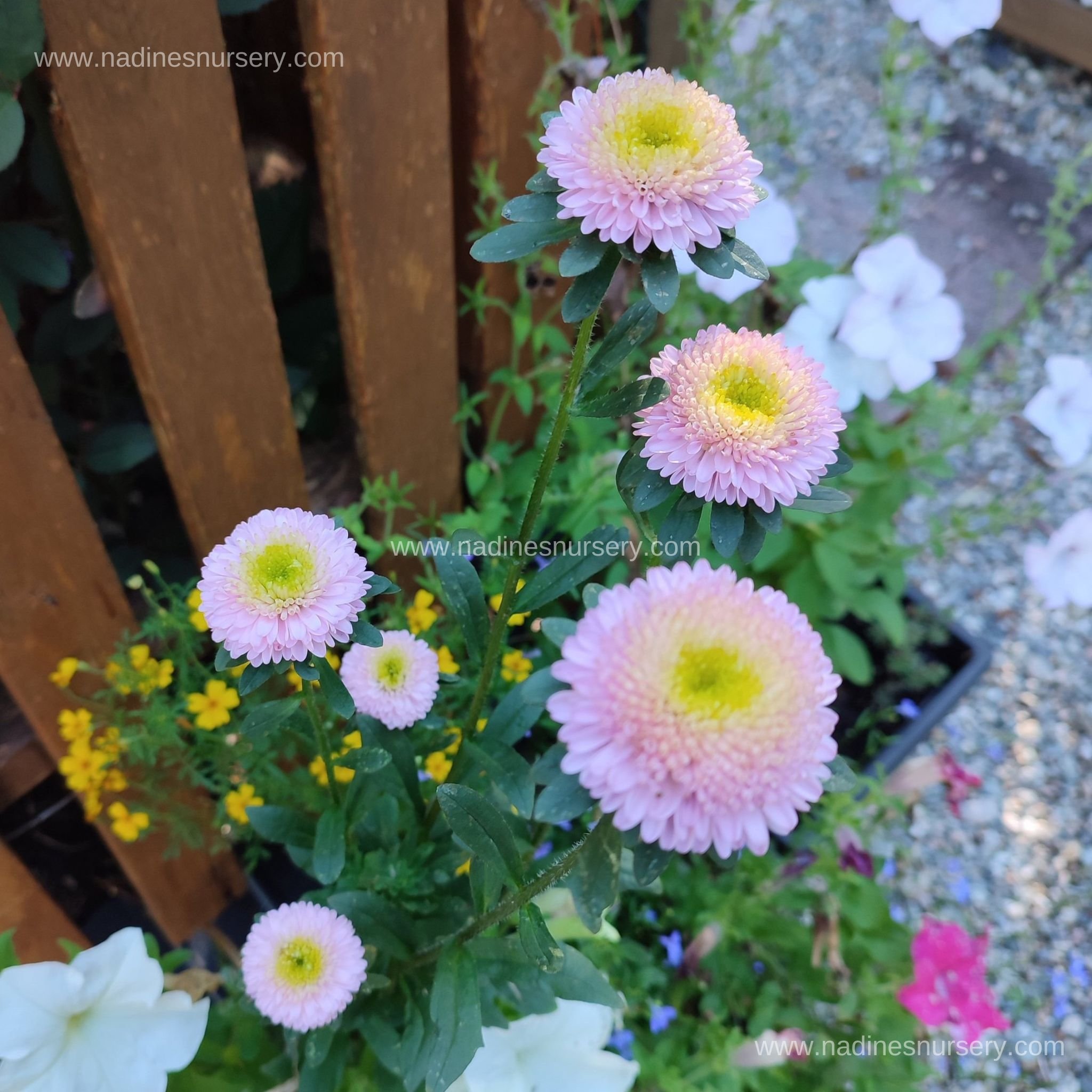
Annual. A light pink variety with glowing, golden-peach centers. These 1.5-2.5” flowers will provide a burst of late season colour, both in the garden and in the vase. Vigorous plants are densely branched, providing an abundance of blooms. Plant in average to rich soil, and fertilize monthly for largest blooms
Location: Mid-border, Mixed container, Cut flower garden
Bloom Period: August to October
Height: 32-36”
Plant Spacing: 6-8”
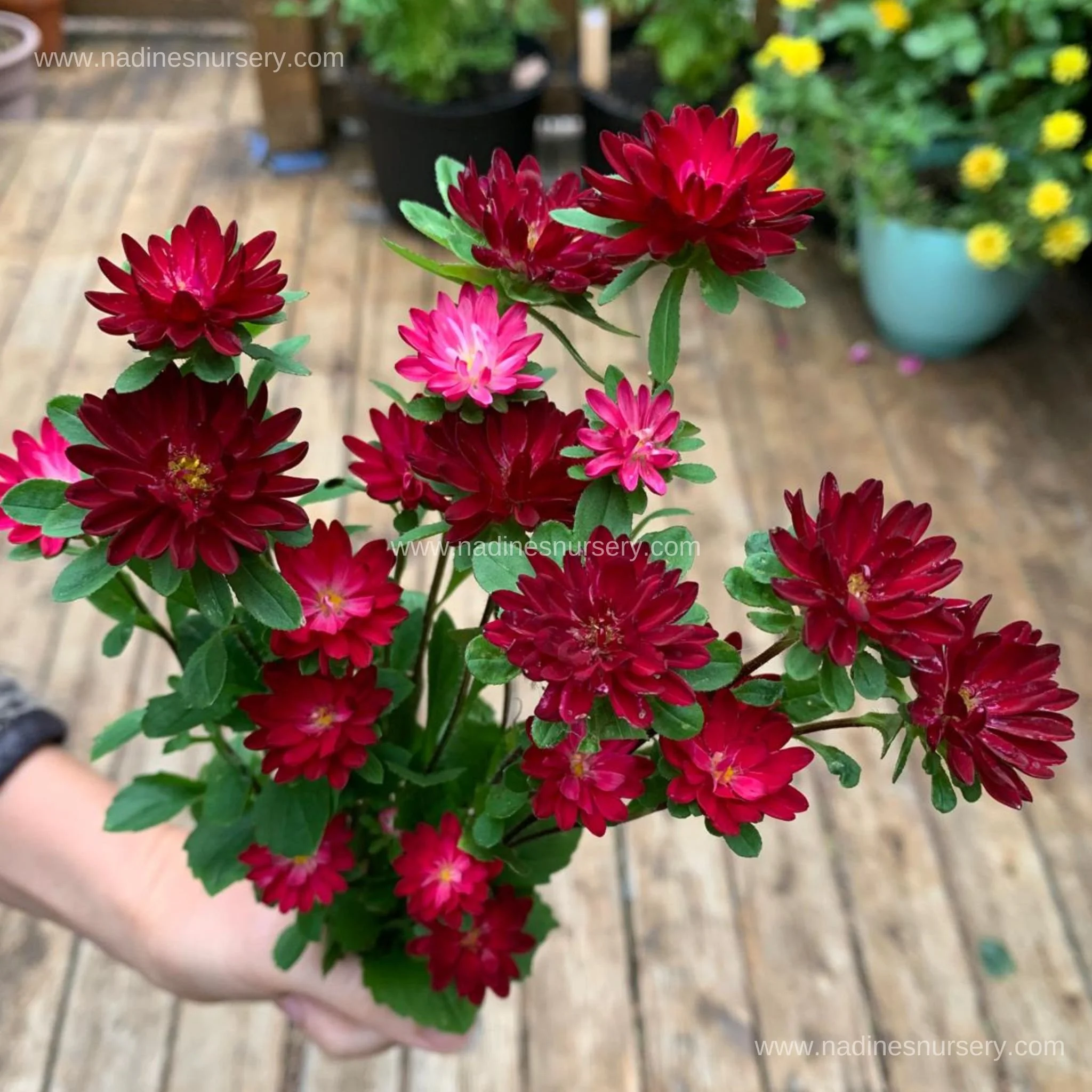
Annual. A captivating spray of dainty, 1” blooms provide a profusion of late season colour. They are beauties in the garden and stunning in a vase. Vigorous plants are densely branched, providing an abundance of blooms. Plant in average to rich soil, and fertilize monthly for largest blooms
Location: Mid-border, Mixed container, Cut flower garden
Bloom Period: August to October
Height: 30”
Plant Spacing: 6-8”

Perennial. Unique, pagoda-style blooms are a heavy favourite for both people and pollinators! These flowers will leave you marveling at their complex beauty, colours and textures. As an added bonus - the bees go crazy for them, making them a staple for the vegetable garden. When dried, the leaves and flowers have great medicinal value. These are one of the toughest plants in the garden. During both flooding and drought conditions, they continue to thrive. They are deer-resistant and require little maintenance - ideal for the lazy gardener. Plant in hot, dry areas of the garden with slightly sandy soil.
Location: Mid-border, Vegetable companion, Wildflower garden
Bloom Period: August to September
Height: 2’, spreading to 3’
Plant Spacing: 12”
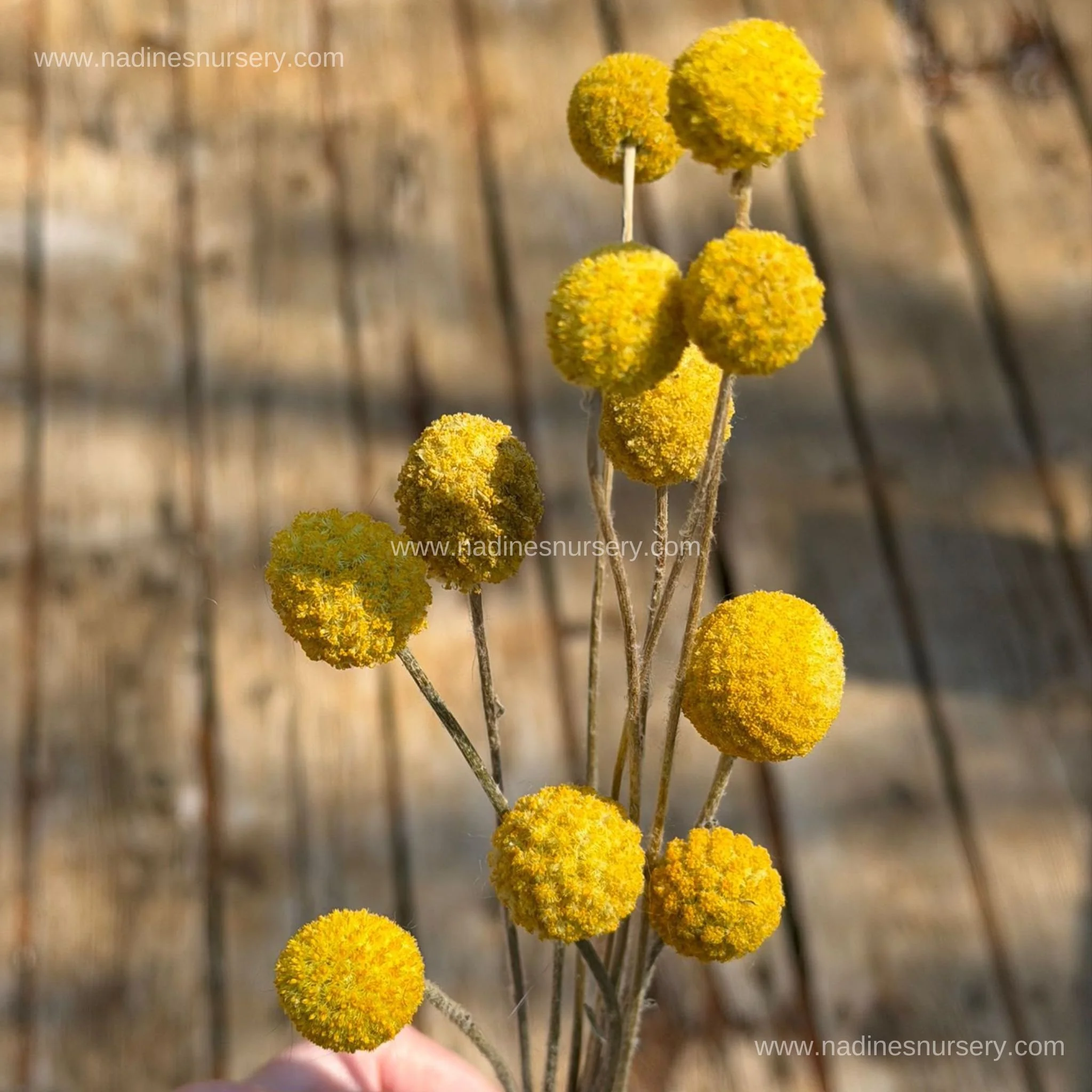
Annual. Billy buttons are a textural treasure for any garden. Brilliant yellow, 1” globes float over a mound of silvery foliage. Expect a beautiful show of colour from early summer all the way to the first fall frost. An excellent cut flower, blooms retain their golden colour even when dried. Plants are incredibly easy to grow. They tolerate heat, drought, and poor soil. For best results, plant in average soil with good drainage.
Location: Mid-border, Mass planting, Cut flower garden
Bloom Period: June to October
Height: 24-30”
Plant Spacing: 12”

Perennial. The quintessential butterfly magnet, milkweed will also attract bees and hummingbirds. Plants will get established in their first year and flower in their second, cheering gardeners and pollinators with their sweetly scented blooms. They are very tolerant of poor soil, drought and heat. Plants also tolerate moisture, and are a great option for clay soils.
Location: Butterfly garden, Sunny border
Bloom Period: July to September
Height: 3- 3.5’
Plant Spacing: 30-36”

Annual. An excellent dwarf variety for flowers beds, containers or to edge a vegetable garden. Large, 3” blooms are in warm shades of orange to pastel cream, and hold up very well in heat and drought.
Calendula are a terrific vegetable companion, as they attract pollinators and repel harmful nematodes in the soil. Their flowers are edible and dried petals can be used in place of saffron, as a garnish, or to make a delightful tea. They are very easy to grow, requiring minimal watering and feeding. Plant in poor to average, well-draining soil and deadhead occasionally for increased blooms.
Location: Front of border, Mixed container, Vegetable garden
Bloom Period: June/July to September
Height: 12-14”
Plant Spacing: 6-12”
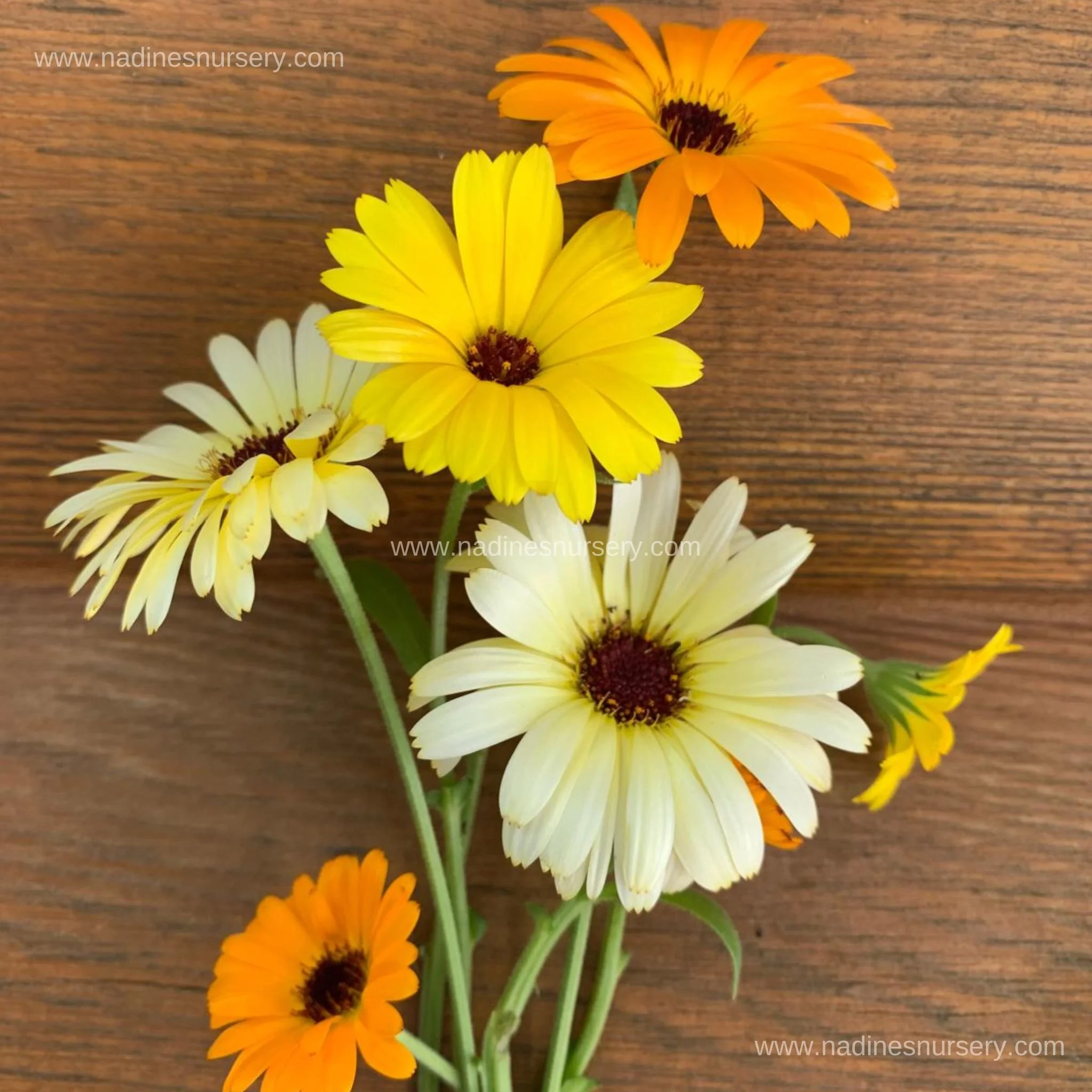
Annual. The quintessential calendula. Blooming in shades of yellow, orange and gold, their double flowers are long-lasting, heat tolerant and can thrive in poor soils. They make a great cut flower and a lovely background for fall mums.
Calendula are a terrific vegetable companion, as they attract pollinators and repel harmful nematodes in the soil. Their flowers are edible and dried petals can be used in place of saffron, as a garnish, or to make a delightful tea. They are very easy to grow, requiring minimal watering and feeding. Plant in poor to average, well-draining soil and deadhead occasionally for increased blooms.
Location: Mid-border, Vegetable garden
Bloom Period: June to September
Height: 18-24”
Plant Spacing: 12-16”
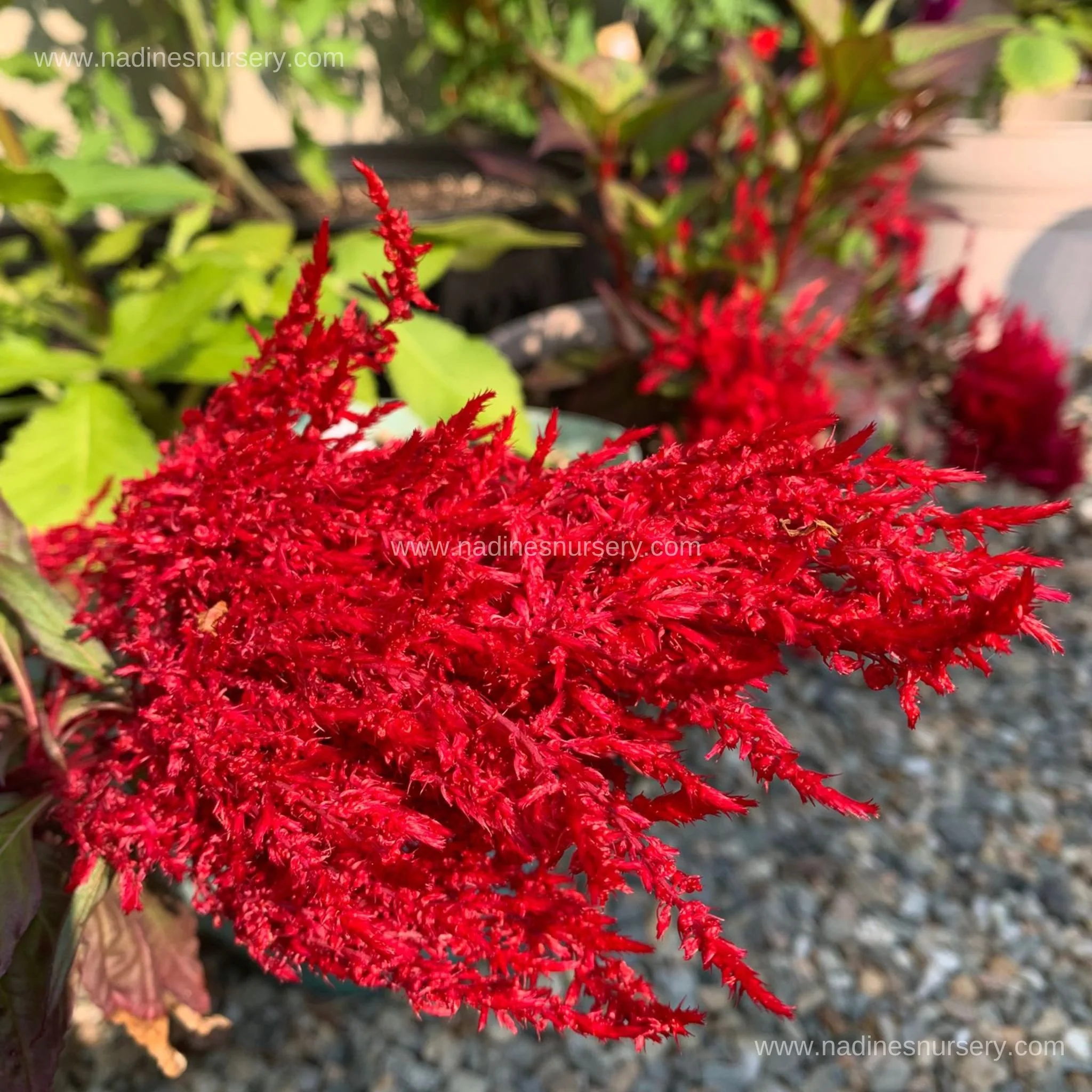
Annual. Add a dazzling flame of colour to your garden or containers! Well-branched plants produce bright red flower spikes that are pollinator magnets, attracting bees, butterflies, and beneficial insects. Plants are low maintenance, drought tolerant, and heat tolerant. Plants will tolerate any soil type, provided it is well-draining.
Location: Container, Cottage garden, Cut flower garden
Bloom Period: June to September
Height: 14”
Plant Spacing: 8”
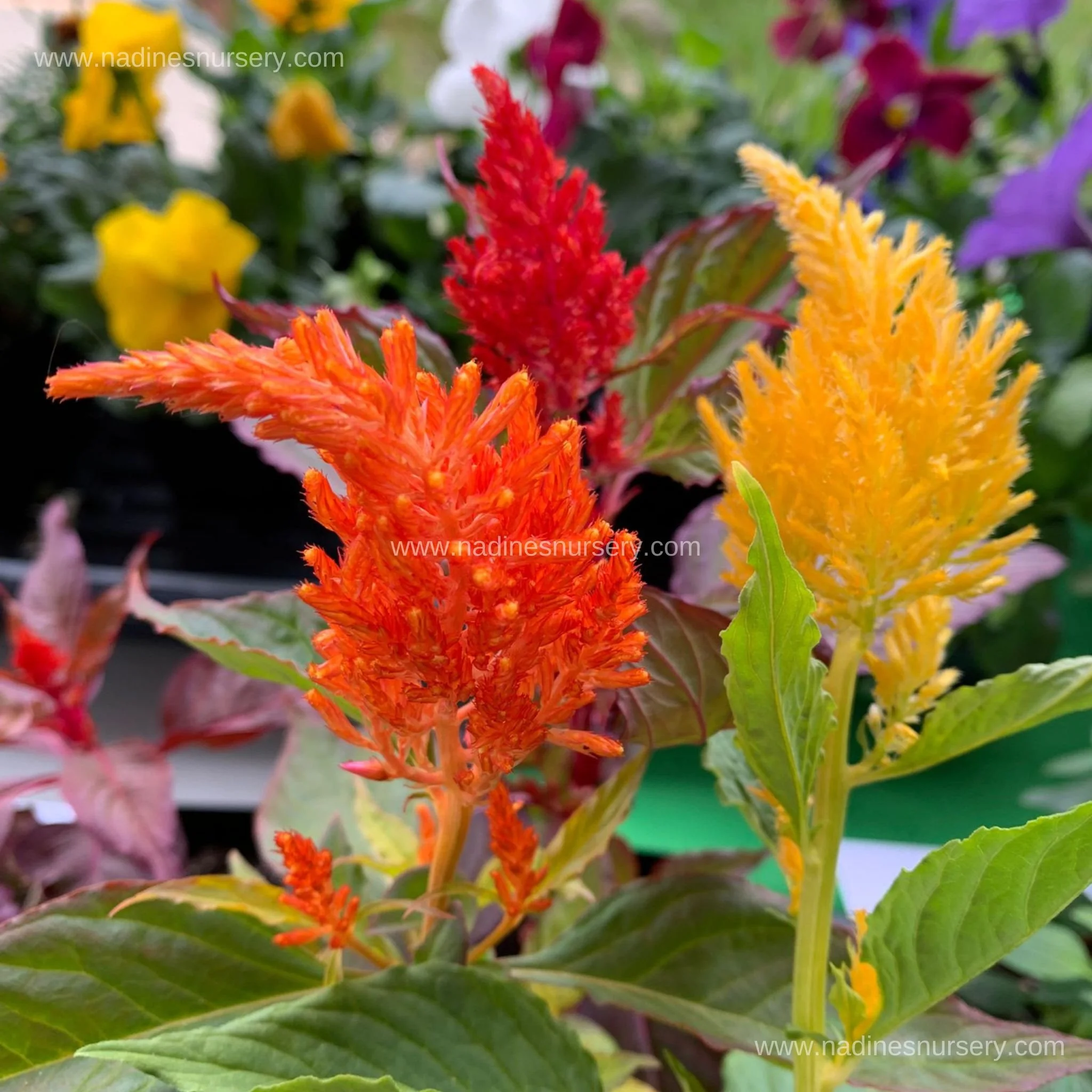
Annual. Branching plants boast a candelabra of bright, long-lasting plumes all summer and don’t mind hot, dry conditions. They can be cut for fabulous fresh flowers or air-dried for a unique “everlasting” display. Plants are low maintenance, drought tolerant, and heat tolerant. Plant in moderate to rich soil. Good drainage is essential.
Location: Front of border, Mixed container, Landscape planting
Bloom Period: July to September
Height: 14-16”
Plant Spacing: 8-10”
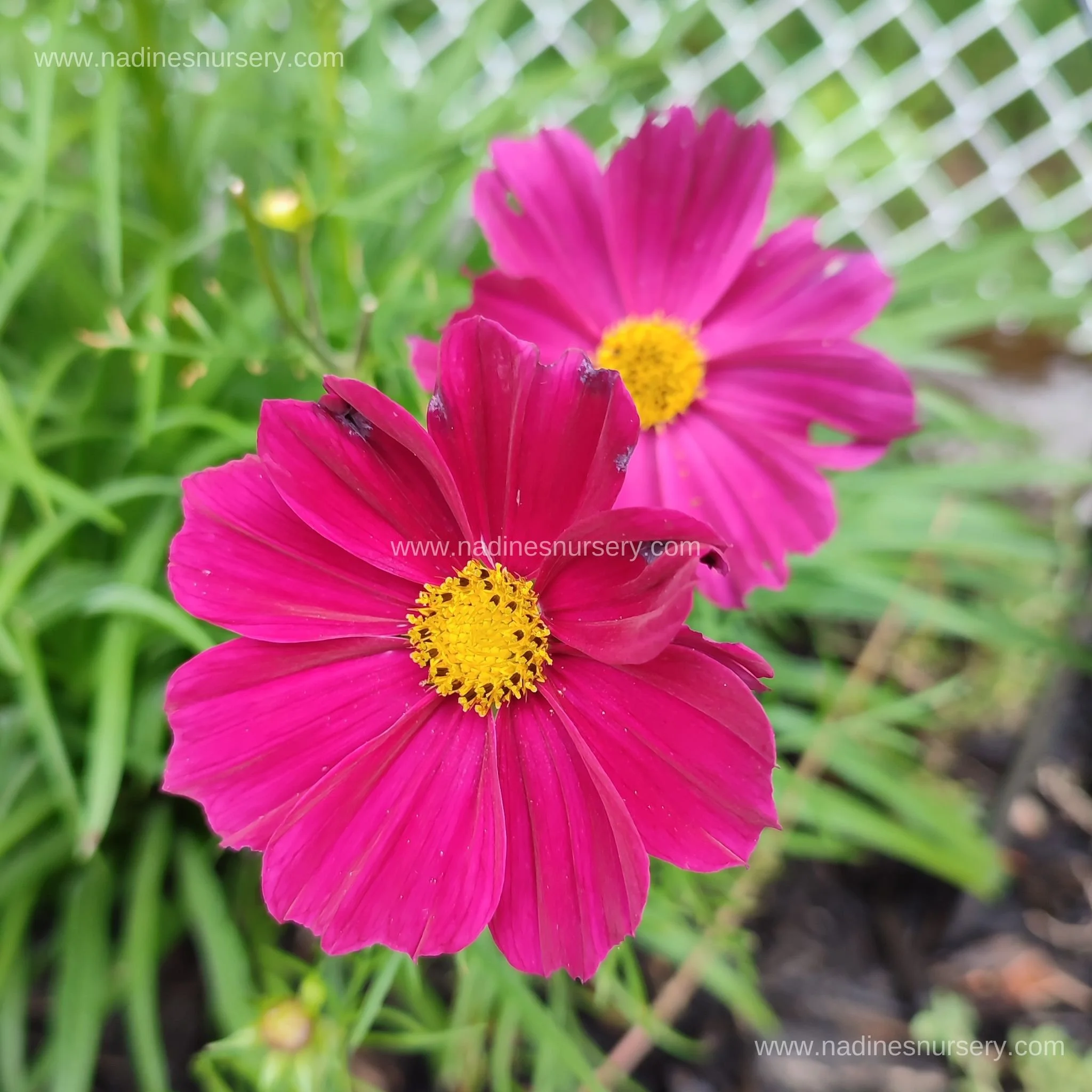
Annual. A lively mix of pink, purple and white flowers on dense, feathery plants. Smaller than other varieties, ‘Apollo’ is perfect for containers.
Cosmos attract bees, butterflies and birds. The plants are self-seeding, but not invasive, and are not prone to pests or disease. They tolerate heat, drought and will grow in even the poorest soil conditions, provided that there is good drainage. This is a truly low-maintenance plant. Avoid too much fertilizer, as this can lead to lush foliage and few blooms.
Location: Mid-border, Mixed container, Landscape planting, Cottage garden
Bloom Period: June to September
Height: 18-26”
Plant Spacing: 12-15”
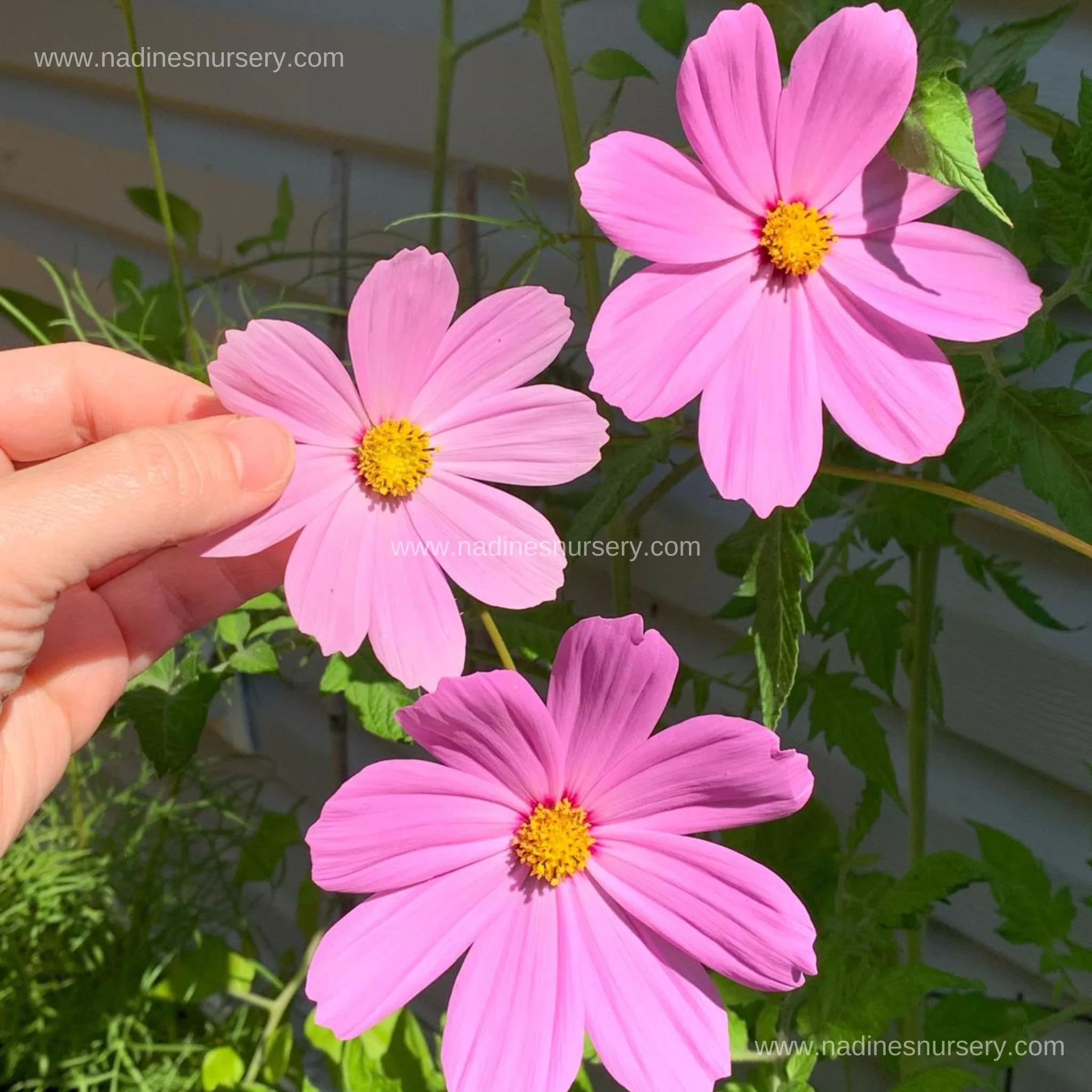
Annual. ‘Gloria’ is a show-off in the garden. The rose-pink petals and piercing crimson eyes will easily charm all who come to visit. Plants are heavy-blooming and self-cleaning, for an easy display of colour from early summer to frost.
Cosmos attract bees, butterflies and birds. The plants are self-seeding, but not invasive, and are not prone to pests or disease. They tolerate heat, drought and will grow in even the poorest soil conditions, provided that there is good drainage. This is a truly low-maintenance plant. Avoid too much fertilizer, as this can lead to lush foliage and few blooms.
Location: Rear border, Landscape planting, Cottage garden
Bloom Period: June to September
Height: 3-5’
Plant Spacing: 18”

Annual. A beautiful dwarf variety, ‘Figaro’ produces showy, double and semi-double 2.5-3” flowers on well-branched, bushy plants. Colours are a mix of red, pink, orange, yellow or white. These dahlias perform beautifully in beds, borders, or containers, and are one of the best varieties for larger landscape plantings. Flowers attract bees and butterflies, and are excellent for cutting. Plant in average, well-drained soil and maintain even moisture throughout the season. Apply either granular fertilizer at planting time, or apply a liquid fertilizer monthly.
Location: Front of border, Container, Landscape planting
Bloom Period: June to September
Height: 12-14”
Plant Spacing: 12”
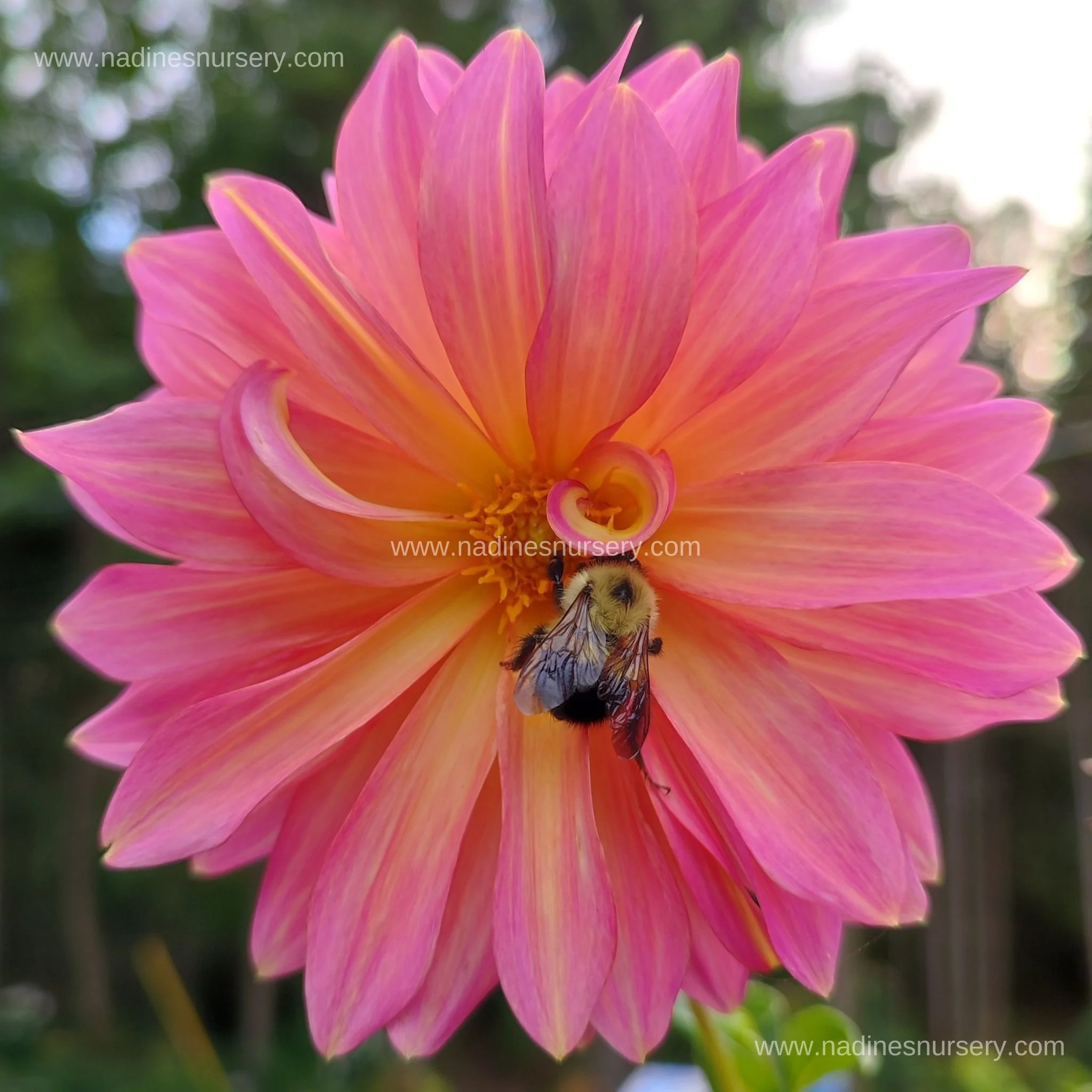
Annual. Brilliant and fluffy, these 5-6” blooms are bright pink and dipped in gold.
Dahlias attract plenty of bees and butterflies. Long, strong stems make them superb cut flowers. Plant in average, well-drained soil and maintain even moisture throughout the season. Apply either granular fertilizer at planting time, or apply a liquid fertilizer monthly.
Location: Rear border, Cut flower garden
Bloom Period: July to October
Height: 4’
Plant Spacing: 12-18”
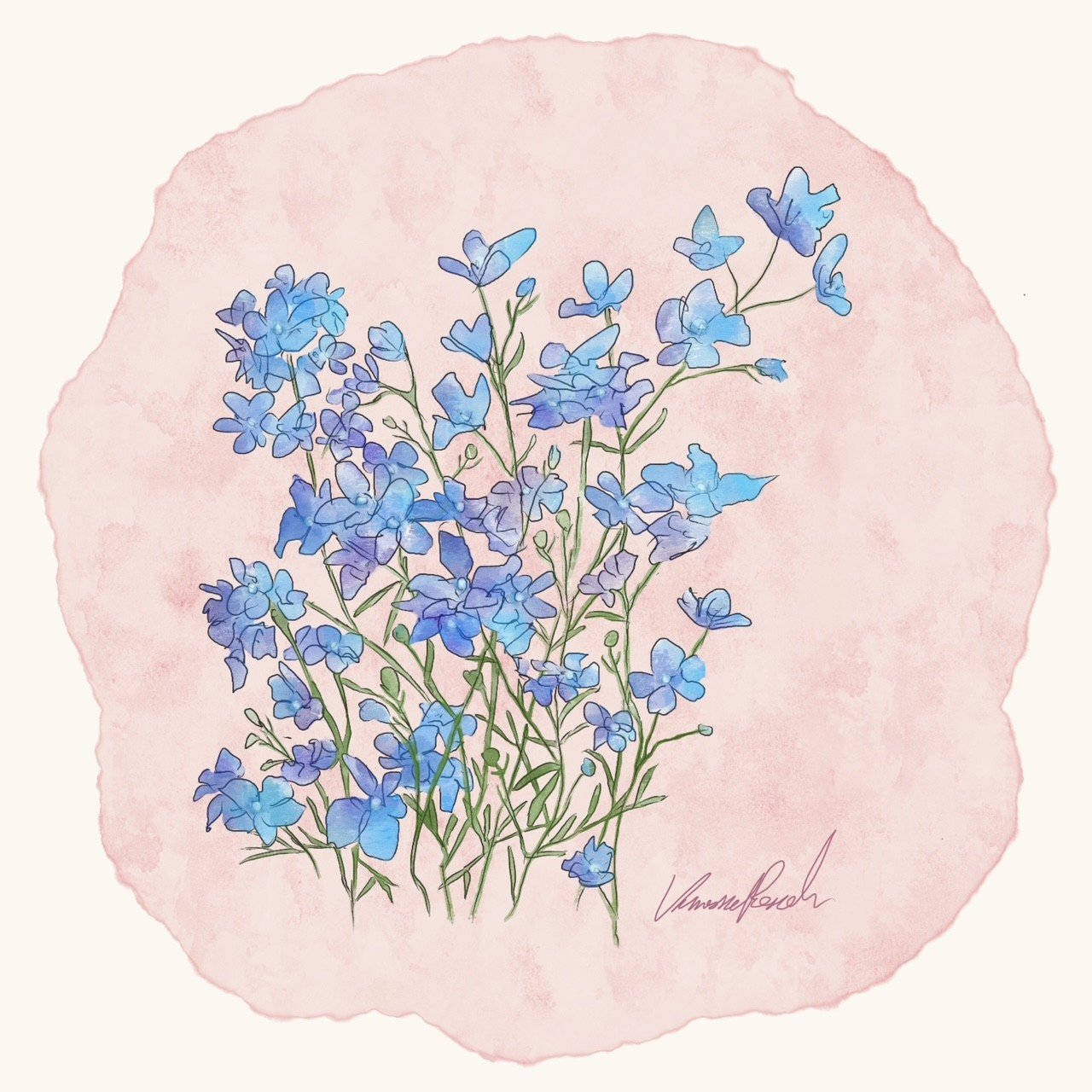
Perennial. Sprays of marine blue flowers adorn mounds of lacy green foliage. This compact variety blooms profusely over a long period of time, is low maintenance, and does not require staking. They also make terrific cut flowers.
Delphiniums are a star in the early summer border. They attract bees, butterflies and hummingbirds, and make an excellent companion for lilies, daylilies, irises and roses. Plants will grow best in rich, well-draining soil that maintains even moisture. Provide regular fertilization and cut stalks back after blooming.
Location: Front border, Cottage garden, Cut flower garden
Bloom Period: June/July
Height: 18-20”
Plant Spacing: 10-12”

Perennial. Warm, sky-blue flowers with white bees. ‘Magic Fountains’ is an ideal series for smaller gardens, especially in windy areas where taller varieties would struggle. Plants do not require staking and provide plenty of cutflowers.
Delphiniums are a star in the early summer border. They attract bees, butterflies and hummingbirds, and make an excellent companion for lilies, daylilies, irises and roses. Plants will grow best in rich, well-draining soil that maintains even moisture. Provide regular fertilization and cut stalks back after blooming.
Location: Rear border, Cottage garden, Cut flower garden
Bloom Period: June/July
Height: 30-36”
Plant Spacing: 12-14”
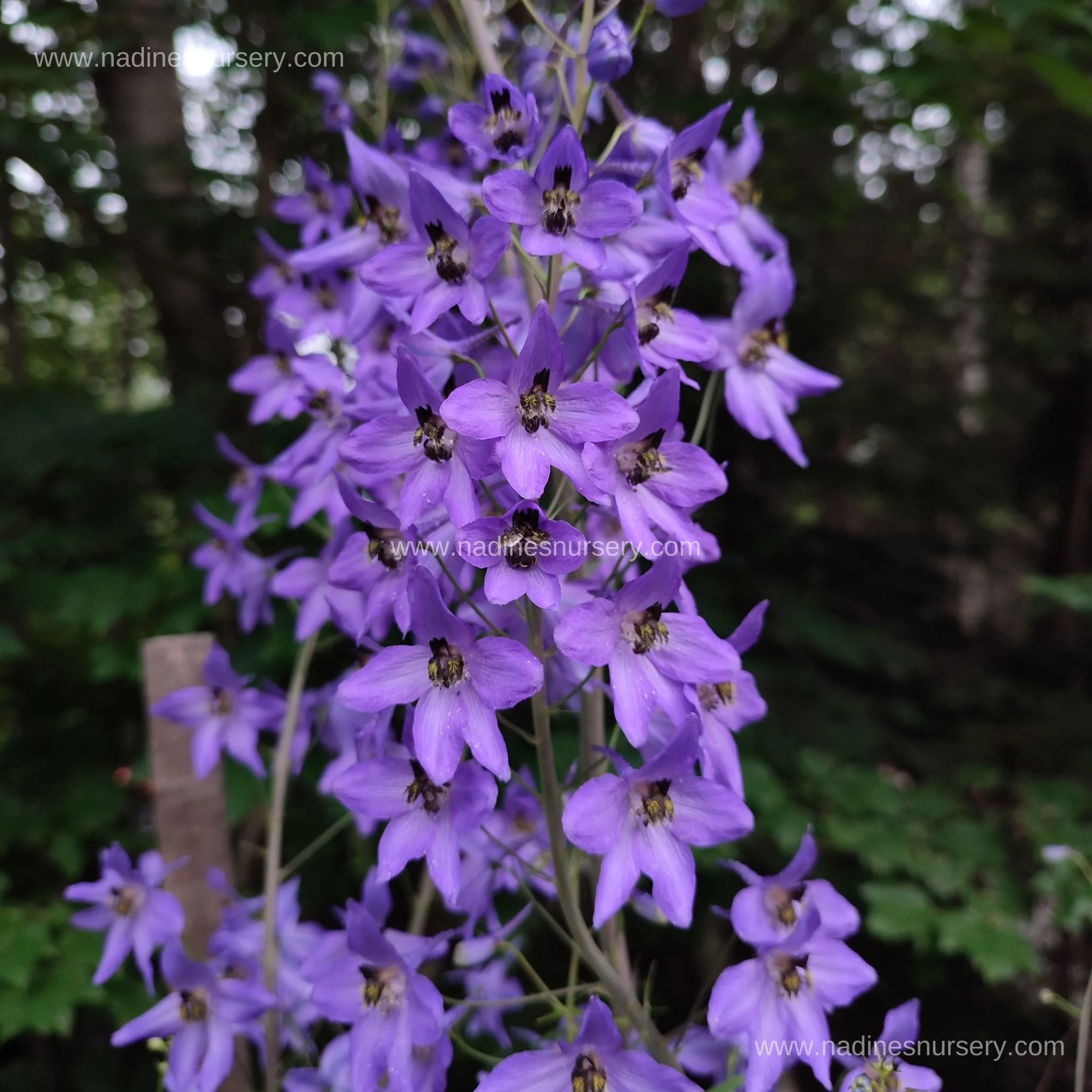
Perennial. A splendid addition to a sunny border or old-fashioned cottage garden. These tall perennials are prized by gardeners for their huge, dark purple flowers that bloom for weeks from early to midsummer. A splendid addition to cottage gardens, its dramatic height draws attention from quite a distance. Requires staking for wind protection.
Delphiniums are a star in the early summer border. They attract bees, butterflies and hummingbirds and make an excellent companion for lilies, daylilies, irises and roses. Plants will grow best in rich, well-draining soil that maintains even moisture. Provide regular fertilization and cut stalks back after blooming.
Location: Rear of border, Cottage garden, Cut flower garden
Bloom Period: June/July
Height: 4-7’
Plant Spacing: 18-24”
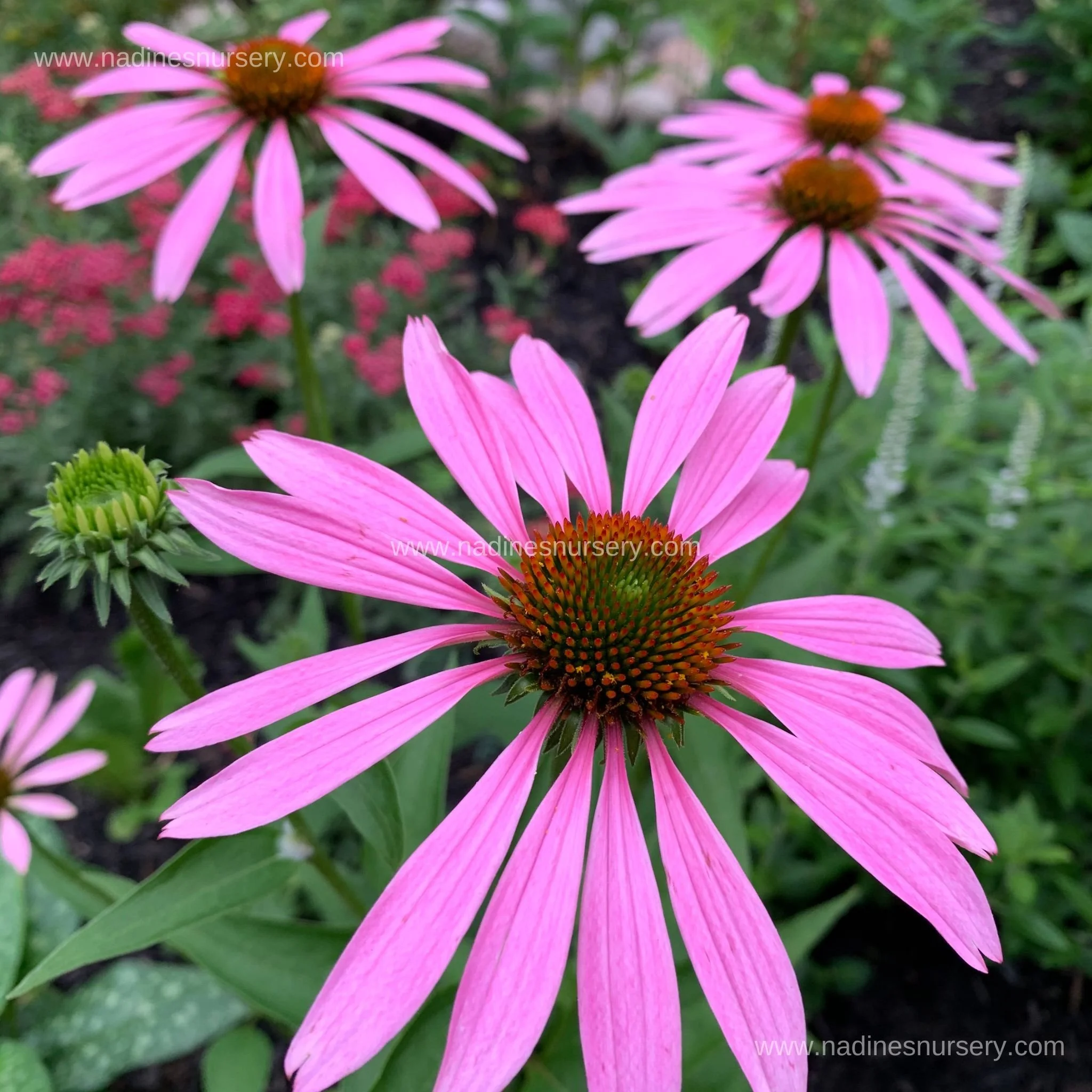
Perennial. Large, rosy-pink flowers will add cheerful colour to any landscape or border. Plants are low maintenance and easy to grow. They tolerate heat, drought and poor soil. They are excellent cut flowers and highly attractive to pollinators. They also attract beneficial insects, making them a great companion for the vegetable garden.
Location: Border, Butterfly garden, Vegetable garden
Bloom Period: July to October
Height: 36-48”
Plant Spacing: 18-24”
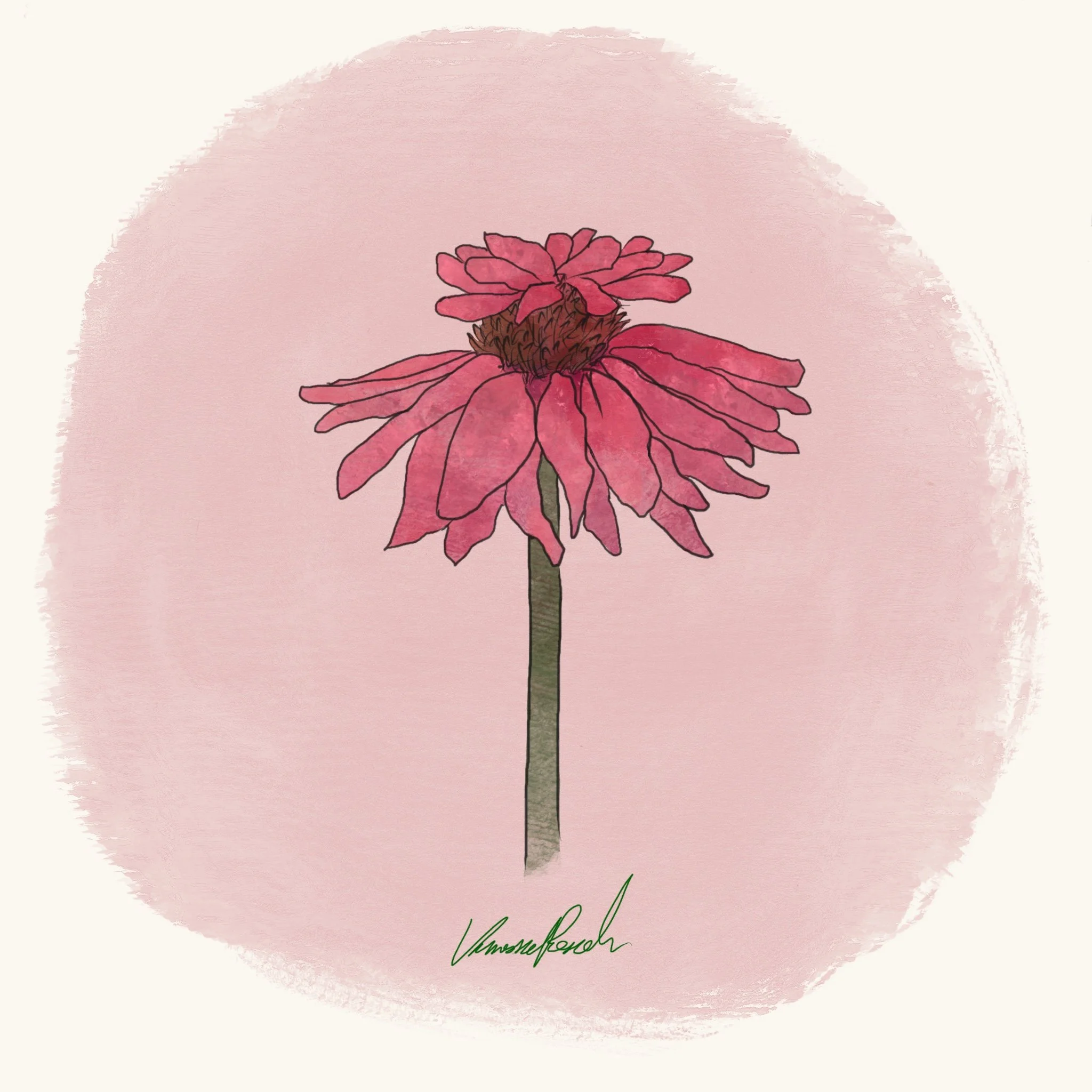
Perennial. A unique twist on a garden classic! This variety boasts two tiers of flowers, one above and one below its cone. These two-tiered blooms will appear in the plant’s second year.
Plants are low maintenance and easy to grow. They tolerate heat, drought and poor soil. They are excellent cut flowers and highly attractive to pollinators. They also attract beneficial insects, making them a great companion for the vegetable garden.
Location: Border, Butterfly garden, Vegetable garden
Bloom Period: July to October
Height: 36-48”
Plant Spacing: 18-24”

Perennial. Unusual, dramatic, and an absolute pollinator magnet! Large, 3” blooms attract bees, butterflies, and birds. Long, straight silver stems provide a splendid contrast to any perennial bed, but the glowing blue orbs create a particularly ethereal effect over white and green hues. They are long-living perennials, living 10 years or more, and are not invasive. They make beautiful, unique additions to fresh cut or dried arrangements. Globe Thistles are an extremely low maintenance addition to the garden. They thrive in poor, sandy, dry soil. Average water will bring the most flowers.
Location: Sunny border, Perennial bed, Cut flower garden
Bloom Period: July/August
Height: 3-4’
Plant Spacing: 18-24”

Annual. Watch dozens of brightly-coloured globes dance over felted green leaves. ‘Las Vegas’ brings a light and airy quality to your garden, appearing in a mix of plum, pink or pure white. They are an easy addition to an annual bed, blending effortlessly with bolder flowers like petunias and marigolds.
Gomphrena thrive in areas with full, hot sun, receiving a “Flameproof” certification by the Dallas Arboretum for their top performance in extreme heat. Their prolific blooms attract butterflies and hummingbirds, and make long-lasting fresh cut flowers which retain their colour when dried. Their effect is most striking when planted in groups. Easy to grow in any well-drained soil.
Location: Sunny border, Mixed container, Landscape planting, Cut flower garden
Bloom Period: July to September
Height: 18-28”, spreading to 20”
Plant Spacing: 12-18”

Annual. An old-fashioned Victorian favourite, Heliotrope is as known for drawing in butterflies as it is for its magnificent fragrance. Heavy clusters of deep violet blooms stand out over bushy, dark green foliage. The flowers, with their sweet almond and vanilla scent, are still cultivated for perfume-making in Europe. Enhance this fragrance by planting en masse. They also perform well in containers. Grow in rich, well-draining soil and feed monthly. Plants are drought and heat tolerant once established. Note that all parts of the plant are poisonous.
Location: Landscape planting, Container, Butterfly garden
Bloom Period: July to September
Height: 12-18”
Plant Spacing: 10-12”
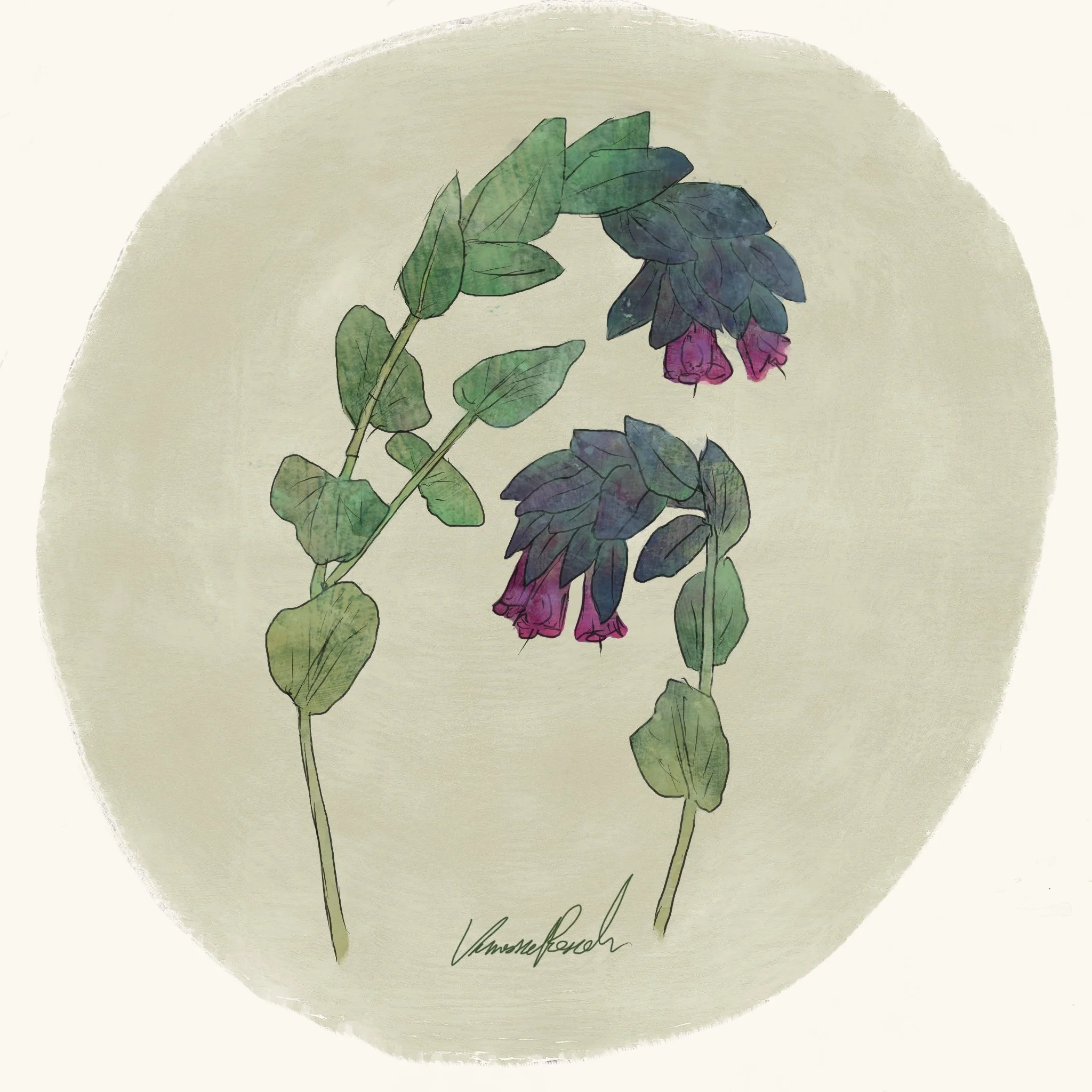
Annual. A unique an interesting variety. Arching stems produce nodding blooms in blue-purple hues. An excellent cut flower, and positively adored by bees!
Plants tolerate both heat and drought. They will grow in any soil type, provided it is well-draining.
Location: Border, Container, Vegetable garden
Bloom Period: July to September
Height: 24-36”
Plant Spacing: 12”

Perennial. Grown as much for its lovely fragrance as it is for its beauty in the garden, lavender offers a host of health benefits. It is also a pollinator magnet, attracting dozens of bees as soon as it begins to bloom in June and July. Plants will remain small in their first year, then will fill out significantly before blooming in their second year. Plants prefer dry, well-drained soil that is not too fertile.
Harvest: Blooms in early summer.
Plant Height: 2’, spreading 2-3’
Plant Spacing: 12-18”

Annual. Rose coloured flowers with large white eyes provide bold colour to any mixed arrangement.
Lobelia are vigorous plants that flower heavily all season. ‘Regatta’ is a superb trailing variety with great heat tolerance. Their delicate blooms cascade beautifully over the edge of hanging baskets and containers, attracting butterflies and pollinators. Self-cleaning, and low maintenance, lobelia are very easy to grow. Plant in rich, well-draining soil. Water regularly and fertilize containers every two weeks.
Location: Mixed container, Hanging basket
Bloom Period: June to September
Height: 5”, spreading to 15”
Plant Spacing: 6”

Annual. A charming burst of bright, sapphire blue flowers with white eyes will provide the finishing touch to window boxes and planters.
Lobelia are vigorous plants that flower heavily all season. Their delicate blooms cascade beautifully over the edge of hanging baskets and containers, attracting butterflies and pollinators. Self-cleaning, and low maintenance, lobelia are very easy to grow. Plant in rich, well-draining soil. Water regularly and fertilize containers every two weeks.
Location: Mixed container, Hanging basket
Bloom Period: June to September
Height: 6”, spreading to 12”
Plant Spacing: 6”
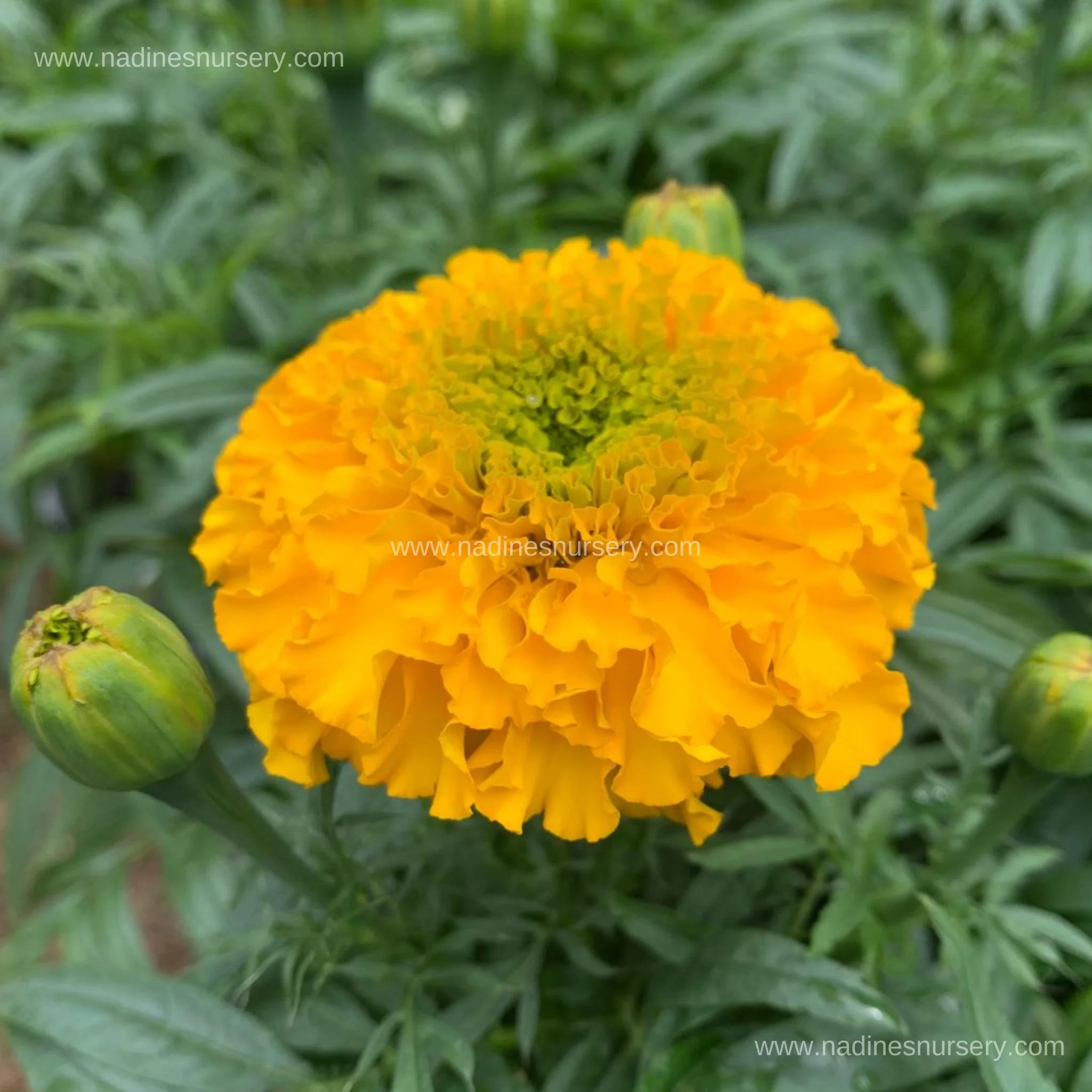
Annual. Huge blooms in great, showy quantity all summer long. Their carpet-like spread makes them excellent for creating masses of colour in the landscape or large borders. Big Duck marigolds are also extremely heat tolerant.
The quintessential companion plant, marigolds are stars in the vegetable garden. They attract bees, butterflies and beneficial predatory insects. They are an excellent companion for tomatoes and potatoes, as they repel harmful insects and soil nematodes. Plant in average soil with even moisture and fertilize every few weeks.
Location: Vegetable garden, Mid to read border, Mixed container
Bloom Period: June to September
Height: 12-24”
Plant Spacing: 12”
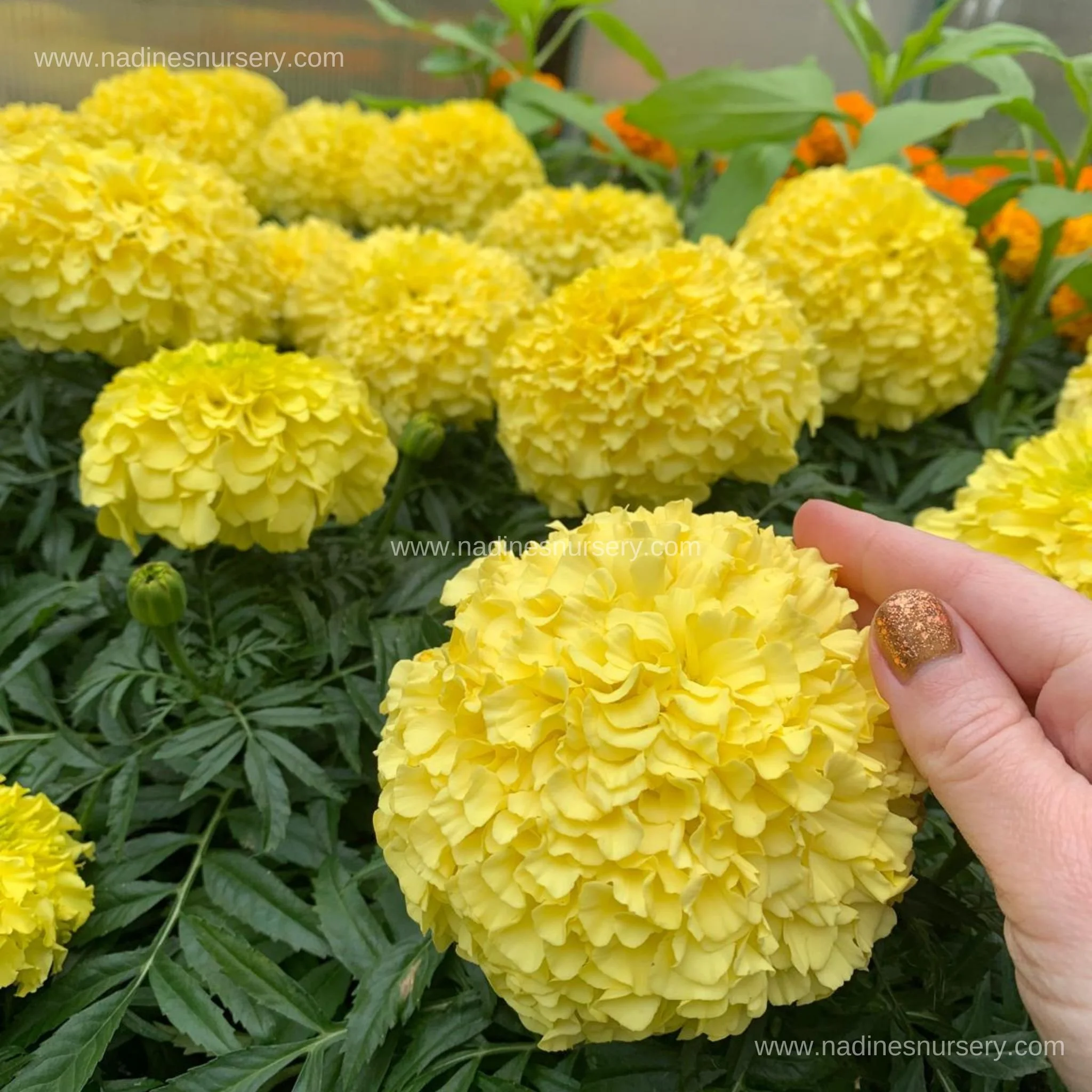
Annual. Enormous, fully double, 4” blooms in vibrant pastel yellow. Plants are compact, tidy and sturdy. Heavy-blooming and heat tolerant, this is an outstanding variety for massing in the landscape or making colourful patio containers.
The quintessential companion plant, marigolds are stars in the vegetable garden. They attract bees, butterflies and beneficial predatory insects. They are an excellent companion for tomatoes and potatoes, as they repel harmful insects and soil nematodes. Plant in average soil with even moisture and fertilize every few weeks.
Location: Vegetable garden, Landscape planting, Mixed container
Bloom Period: June to September
Height: 12-14”
Plant Spacing: 6-8”

Annual. This Mexican marigold is smothered in petite, sunny flowers with a light citrus scent. Plants grow in neat mounds with lacy green foliage. Both leaves and flowers are edible - leaves as a flavourful salad green, and flowers to dress up salads or desserts.
The quintessential companion plant, marigolds are stars in the vegetable garden. They attract bees, butterflies and beneficial predatory insects. They are an excellent companion for tomatoes and potatoes, as they repel harmful insects and soil nematodes. Plant in average soil with even moisture and fertilize every few weeks.
Location: Vegetable garden, Front of border, Mixed container
Bloom Period: June to October
Height: 12”
Plant Spacing: 12”

Perennial. An award winning variety of a native North American wildflower, ‘Crystal Peak’ boasts pure white flowers on long spikes that attract an abundance of pollinators to the garden. It is a Fleuroselect Gold Medal award winner (Europe’s top prize). Flowers are self-cleaning, and do not fade or brown as they age. Their curious name comes from the fact that when plants are in full bloom, you can push the snapdragon-like blossoms to hold any position you like - a helpful trait in flower arrangements. Plants thrive in average soils and moderately moist conditions, making them an ideal choice for clay soils and waterside plantings. They will easily naturalize into the garden, but are polite spreaders, having been bred to retain their compact habit much more so than their native counterparts.
Location: Sloping waterside, Wildflower meadow, Coastal garden
Bloom Period: July to September
Height: 16”
Plant Spacing: 18-24”
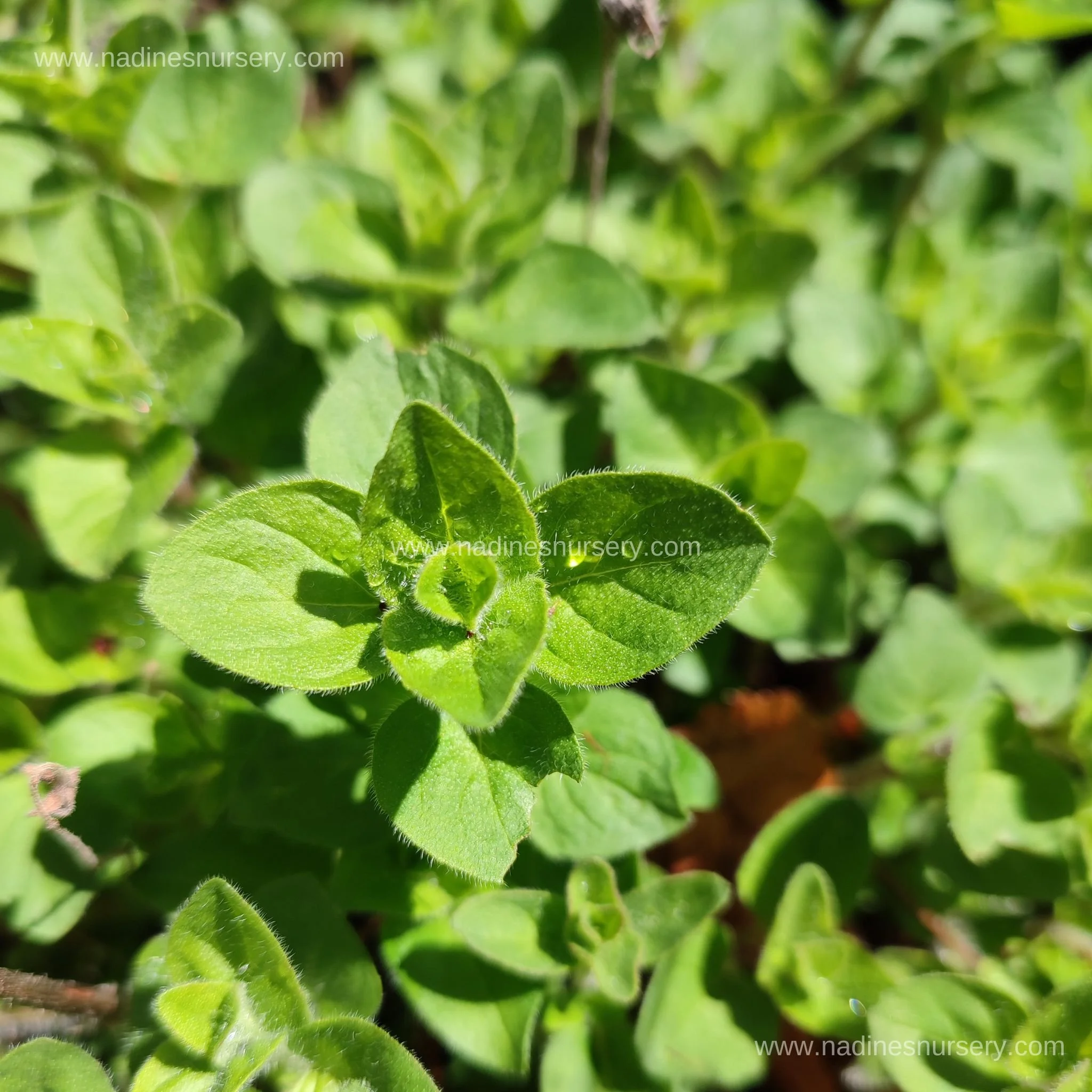
Perennial. An aromatic herb that is popular for its use on pizza and in pasta sauce. It works well with most Mediterranean cuisine - from fish to chicken, risotto and vegetables. Use a few leaves to brighten up a meal or deepen the flavour of roasts, sautes and stews. In the garden, it makes a great companion for any herb or vegetable. Most notably it repels cabbage worms for Brassicas. Be mindful where oregano is placed in-ground, as it will eventually spread into an invasive ground cover. Fortunately, they perform well in small or medium sized containers, which can then be overwintered on a sunny windowsill indoors. Plants prefer loamy, sandy soil that is well-draining. They do not require fertilization and should only be watered when soil is dry to the touch.
Harvest: All season. Pick individual leaves after branches reach 4-5”.
Plant Height: 12-18”
Plant Spacing: 6-10”

Perennial. A striking, blue beauty that happens to be a pollinator magnet! Bees and butterflies will swarm the huge, 4” flowers over a long blooming season. Ruffled petals will open around a pale central disc. As the bloom matures, this disc becomes studded with dark stamens to give the characteristic “pincushion” appearance. Plants tolerate a variety of soil types, but will thrive in rich, well-draining soil. Drought tolerant once established, they will benefit from regular watering and fertilization in their first year.
Location: Mid-border, Cut flower garden, Rock garden
Bloom Period: July/August
Height: 28”
Plant Spacing: 12-18”
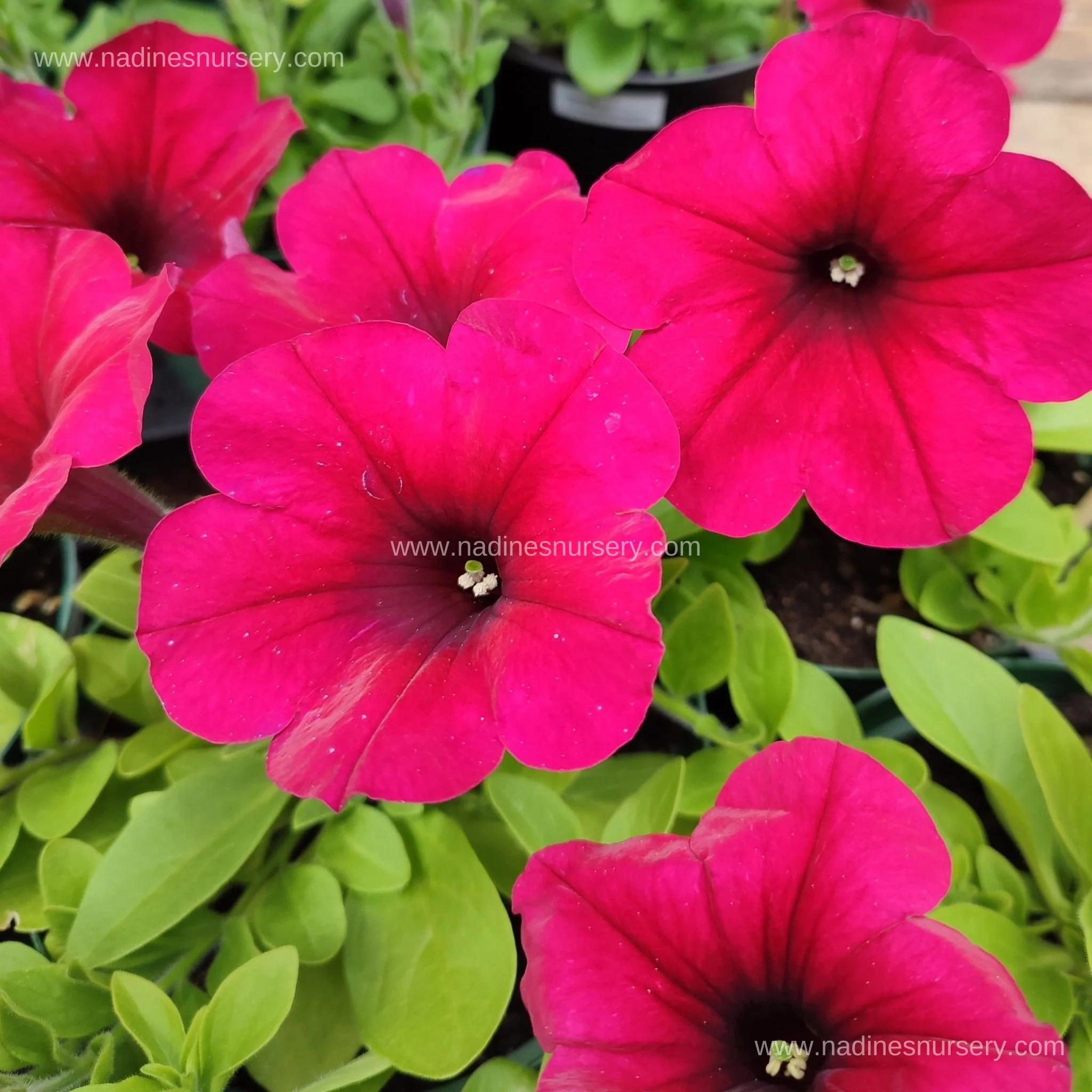
Annual. Scrumptious rosy red flowers will add a shimmer of velvety texture to your landscape or containers. ‘Easy Wave’ petunias are vigorous, self-cleaning, and long-blooming, with a high production of 2.25” flowers all season.
Petunias are a popular summer annual, prized for their beautiful blooms and versatility in the garden. Attracting pollinators and repelling harmful insects, they are an excellent companion for the vegetable garden. Mounding varieties put on a thrilling display in the landscape, and trailing varieties form a graceful ground cover or hanging basket. Plant in light, fertile, well-draining soil. Water regularly and feed container plants every 1-2 weeks.
Location: Landscape planting, Mixed container, Hanging basket
Bloom Period: June to September
Height: 8-12”, spreading to 2.5-3’
Plant Spacing: 12-18”

Annual. A vining petunia! Fragrant, 2” flowers are bright rose-purple. Amazingly, plants have a climbing growth habit when grown along vertical supports like strings, trellises or a tomato cage. These vines can easily be used to carpet a landscape, or create a curtain of colour by planting them in a large hanging basket.
Petunias are a popular summer annual, prized for their beautiful blooms and versatility in the garden. Attracting pollinators and repelling harmful insects, they are an excellent companion for the vegetable garden. Mounding varieties put on a thrilling display in the landscape, and trailing varieties form a graceful ground cover or hanging basket. Plant in light, fertile, well-draining soil. Water regularly and feed container plants every 1-2 weeks.
Location: Trellis, Ground cover, Hanging basket
Bloom Period: June to September
Height: vines of 6‘
Plant Spacing: 12-18”
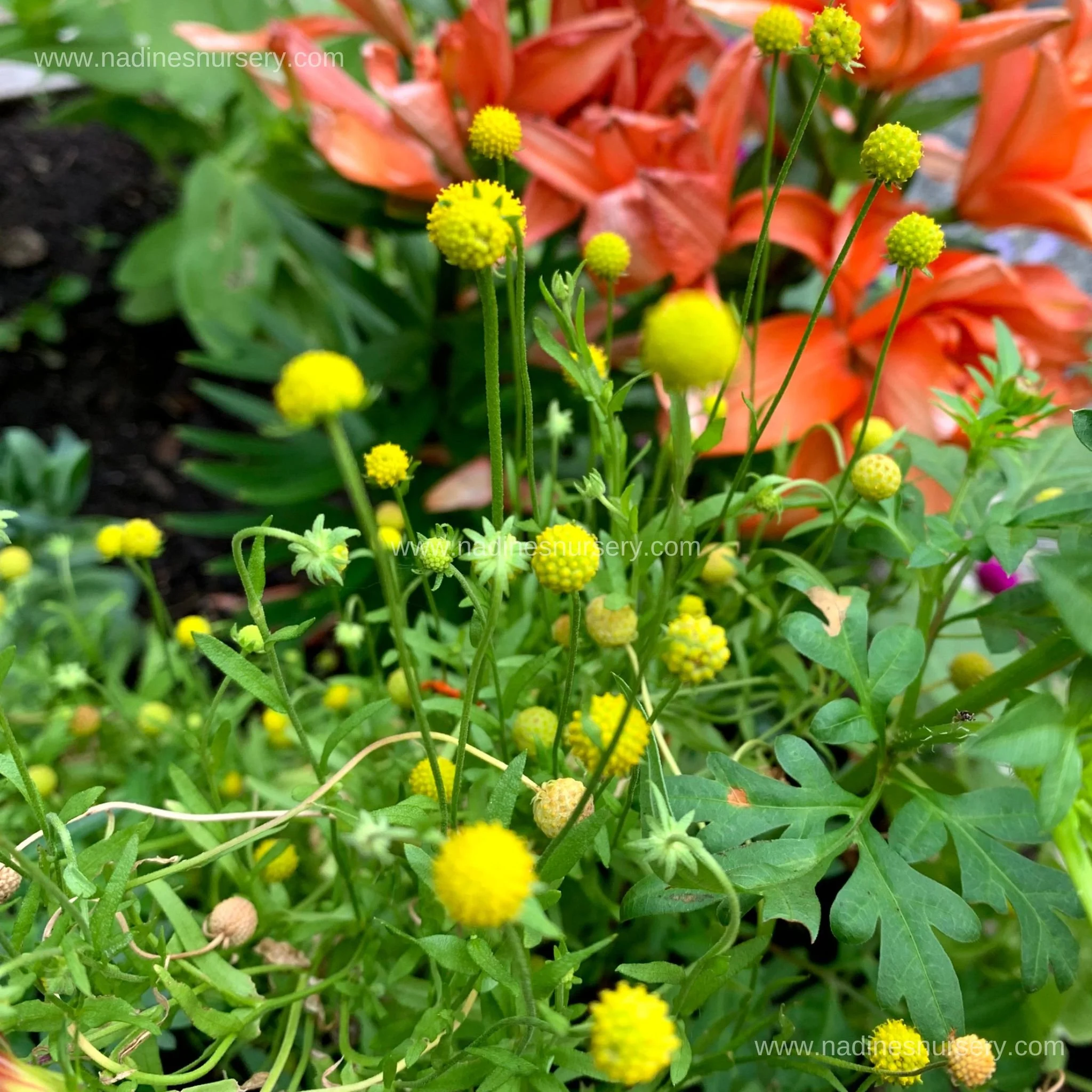
Annual. Brush past this plant and you’ll quickly discover where it got its name! Boasting adorable, yellow pom-pom flowers, plants release a sweet pineapple fragrance when moved. They are very low maintenance and easy to grow. They are also very attractive to pollinators and make great cut flowers. Ideally suited for containers. For best results, plant in light, rich, well-draining soil.
Location: Container, Cottage garden
Bloom Period: June to September
Height: 12-18”
Plant Spacing: 12”

Perennial. Low maintenance and long-blooming, this uncommon perennial is an ideal choice for poor, dry soils. A profusion of 1” magenta flowers float above fuzzy, silver-gray foliage, attracting bees, butterflies, and curious onlookers. In the garden, combine with annuals and perennials in pink, purple or blue shades, or contrast with bright yellow flowers. The best effect is seen when grouped in a mass planting. A border or landscape will naturally fill in when plants are allowed to self-seed; Don’t mulch around the base and leave the ground undisturbed in fall to see volunteers pop up in the spring. As a perennial, expect sparse first year blooms, and an explosion of colour in the second. Plants are drought tolerant, and prefer fairly dry, well-draining soil. However, they will also tolerate clay soil, alkalinity, and moist conditions.
Location: Sunny border, Landscape planting, Rock garden, Cottage garden
Bloom Period: June to July
Height: 2.5’
Plant Spacing: 12-15'“

Perennial. An aromatic herb best known for the earthy flavour it lends to savoury dishes. It is an excellent option for salt-free cooking. In the garden, it is a highly ornamental plant, with broad, silvery foliage and gorgeous purple-blue blooms. Plants will begin to flower in their third year, attracting an abundance of bees and butterflies. Their intense aroma repels cabbage moth, making them an excellent companion for Brassicas. Plants prefer loamy, sandy, well-drained soil. They are not heavy feeders and can tolerate some drought. Note: Harvest sparingly in the first year so plants can get established.
Harvest: All season. Pick individual leaves or short sprigs (always leaving 1/3 intact). Best flavour before flowering begins.
Plant Height: 2’, spreading to 2’
Plant Spacing: 18-24”

Perennial. A pollinator magnet, once ‘Salvatore Blue’ springs into bloom, you’ll be amazed at the number of bees and butterflies hovering around these spectacular, violet-blue blossoms. They are also highly attractive to hummingbirds, and make excellent cut flowers. Compact, low-branching plants are long-blooming, easy to grow, and both heat and drought tolerant. Plant in rich, moist, well-draining soil.
Location: Landscape planting, Sunny border, Cottage garden
Bloom Period: June to August
Height: 12-16”
Plant Spacing: 12-16"

Annual. A stunning heirloom variety, ‘Black Prince’ stands out with beautiful, dark leaves and bold crimson flowers. Pair with light-hued plants and silvery foliage for a particularly striking effect.
A cottage garden classic, snapdragons are cool season flowers that will bloom best in spring and fall. They can tolerate light frost, and when allowed, most varieties will readily self-seed. Their beautiful, tubular flowers attract bees and make excellent cut flowers. Dwarf varieties are an excellent addition to containers, and tall, cutting varieties strike an imposing figure in a landscape planting. Plants prefer rich, moist, well-draining soil, with regular watering.
Location: Mixed container, Mid-border, Cottage garden
Bloom Period: June to October
Height: 18”
Plant Spacing: 6-12”

Perennial.An easy spreader that will form an excellent ground cover for dry areas. White flowers will tumble gracefully over the side of a stone wall, form a lovely underplanting for spring bulbs, and can even be incorporated in a mixed container. Plants are drought tolerant once established. They are also salt tolerant, and not particular about soil type, provided that it is well-draining.
Location: Ground cover, Rock garden, Coastal garden
Bloom Period: June/July
Height: 6-12”, spreading 2-3’
Plant Spacing: 12-18”

Perennial. This aromatic herb has a long list of benefits. Their strong scent is known to repel mosquitoes. Leaves are commonly used for tea to relieve digestive problems. Best of all, when purple flowers begin to form in summer, watch as they attract an abundance of bees! However, be mindful of where you plant mint in-ground, as it will eventually spread to form an invasive groundcover. For this reason, it is best grown in 10-12” pots. Placing a few near the vegetable garden will pay off in spades. Plant in rich, moist, well-draining soil, water regularly, and fertilize monthly if growing in containers.
Harvest: when stems are 12” tall.
Plant Height: 18-36”
Plant Spacing: 12”
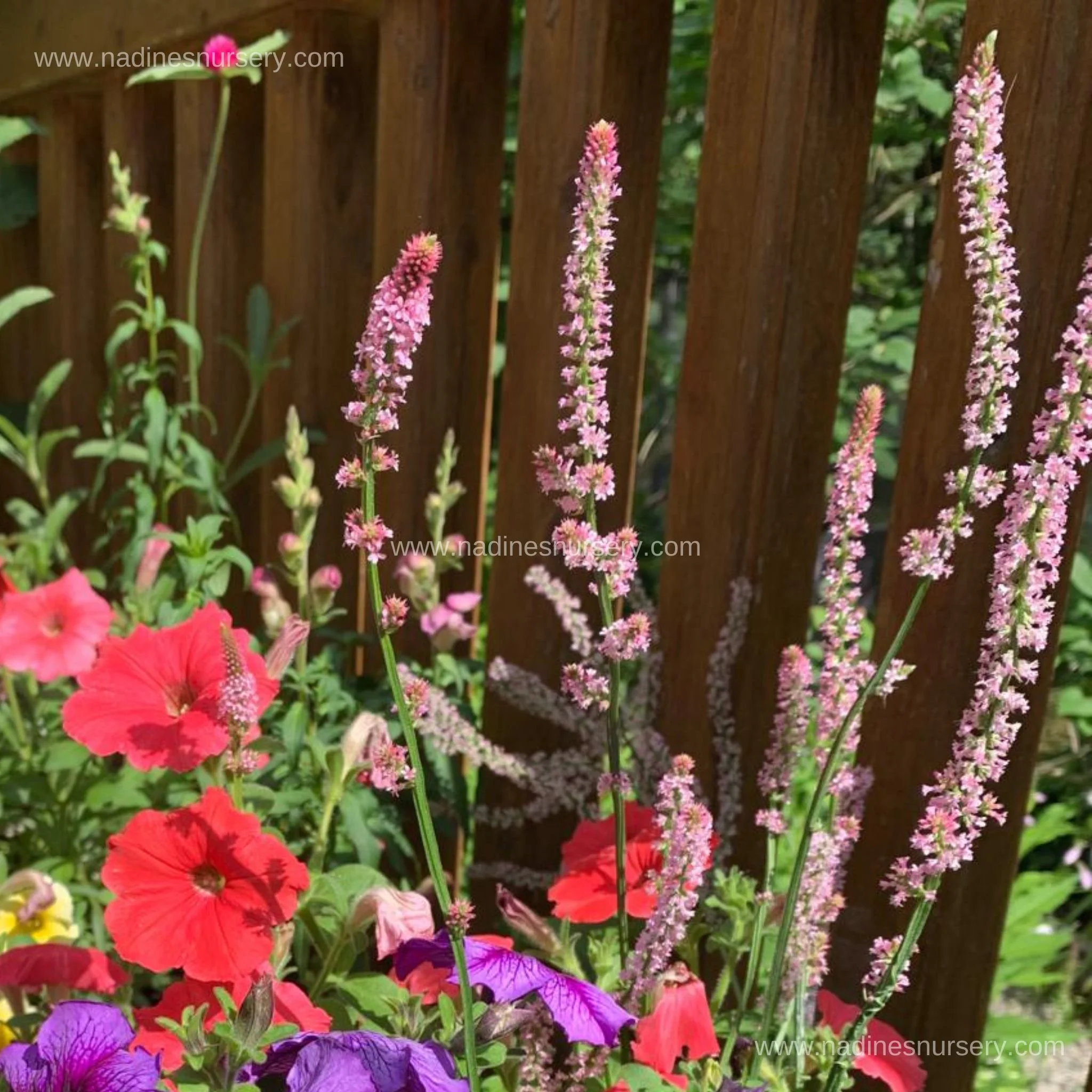
Annual. These spectacular spikes of pink, pipe cleaner-like shoots twist and turn like a Dr. Seuss illustration. Spires are attractive to bees and butterflies. They are an excellent cut flower, adding great interest to any vase or dried arrangement. Plants are salt tolerant, and not particular about soil type so long as it is well-draining. Drought tolerant once established, take care not to overwater. No fertilization necessary.
Location: Mid-border, Cottage garden, Coastal garden
Bloom Period: July to September
Height: 24”
Plant Spacing: 12-14”

Biennial. Large, beautiful flowers in a vivid assortment of pinks, reds and white. Sweet Williams are a terrific addition to any perennial bed that contains roses, lilacs or delphiniums. The cheerful flowers are wonderfully fragrant, make excellent cut flowers, and attract bees, butterflies, and hummingbirds over a very long blooming season. As a biennial, it will flower profusely in its second year, then readily self-seed to offer a future generation of unique blooms. Plants prefer rich, well-draining soil and will benefit from monthly feeding.
Location: Mid-border, Landscape planting
Bloom Period: June to August
Height: 16-24”
Plant Spacing: 6”

Perennial. Magnificent flower heads in lively shades of red, rose, or lavender. Yarrow grows tall and wide, with fine, feathery foliage and long stems that are excellent for cutting. They are a good choice near the vegetable garden, as they attract beneficial insects, pollinators and butterflies, and repel harmful pests. As an added bonus, they are one of the best companions for roses, serving similar pest control duties, without drawing undue resources from the soil. Plants are very easy to grow, tolerating heat, drought, salt and poor soil conditions. They will easily naturalize into the garden, provided soil is well-draining and they receive adequate light.
Location: Sunny border, Wildflower meadow, Coastal garden, Rose garden
Bloom Period: June to September
Height: 24”
Plant Spacing: 12-24”

Perennial. Bright, golden yellow blooms. An excellent filler for fresh or dried bouquets.
Yarrow grows tall and wide, with fine, feathery foliage and long stems that are excellent for cutting. They are a good choice near the vegetable garden, as they attract beneficial insects, pollinators and butterflies, and repel harmful pests. As an added bonus, they are one of the best companions for roses, serving similar pest control duties, without drawing undue resources from the soil. Plants are very easy to grow, tolerating heat, drought, salt and poor soil conditions. They will easily naturalize into the garden, provided soil is well-draining and they receive adequate light.
Location: Sunny border, Wildflower meadow, Rose garden
Bloom Period: July to August
Height: 3-4’
Plant Spacing: 24”

Perennial. Beautiful, billowy clouds of white pompom flowers. Popular as a Victorian era cut flower and medicinal plant, Pearl yarrow is a versatile addition to any garden. It is also a pollinator magnet!
Yarrow grows tall and wide, with fine, feathery foliage and long stems that are excellent for cutting. They are a good choice near the vegetable garden, as they attract beneficial insects, pollinators and butterflies, and repel harmful pests. As an added bonus, they are one of the best companions for roses, serving similar pest control duties, without drawing undue resources from the soil. Plants are very easy to grow, tolerating heat, drought, salt and poor soil conditions. They will easily naturalize into the garden, provided soil is well-draining and they receive adequate light.
Location: Sunny border, Wildflower meadow, Coastal garden, Rose garden
Bloom Period: June to September
Height: 24”
Plant Spacing: 12-24”

Annual. These red-hot cherry double blooms will make any container a sizzling success. ‘Profusion’ are a completely new type of zinnia, featuring vivid, 2” flowers on compact, tidy plants. Their effect is stunning when mass planted, and plants are resistant to heat, humidity, drought, and powdery mildew. This is one series that has been certified “Flameproof”!
Zinnias will attract an abundance of butterflies and hummingbirds to the garden! Dwarf varieties are beautiful in the landscape or mixed containers, providing a flush of cheerful colour all season. Intermediate and tall varieties are outstanding cut flowers. Give the vegetable garden a boost by planting zinnias near tomatoes, potatoes and beans. Plants are very easy to grow, tolerating both heat and drought once established. For best performance, plant in rich, well-draining soil and water regularly.
Location: Front of border, Mixed container, Landscape planting
Bloom Period: June to September
Height: 12-18”
Plant Spacing: 12”